Smoke Damage Cleanup in an NYC Apartment After a Neighbor's Fire
Smoke damage cleanup in an apartment often follows a fire that never reached your door. In a New York City building, smoke from another unit can get in around your apartment door, through air ducts and through other openings, and the apartments below a fire can take the water firefighters used. If nothing in your home burned but it smells of smoke, has a gray or black film on the walls, or has a wet ceiling, you have damage to document and clean properly.
GlobePro Restoration is a 24/7 restoration company based in Brooklyn. This guide is for the apartment next to, above or below the one that burned.
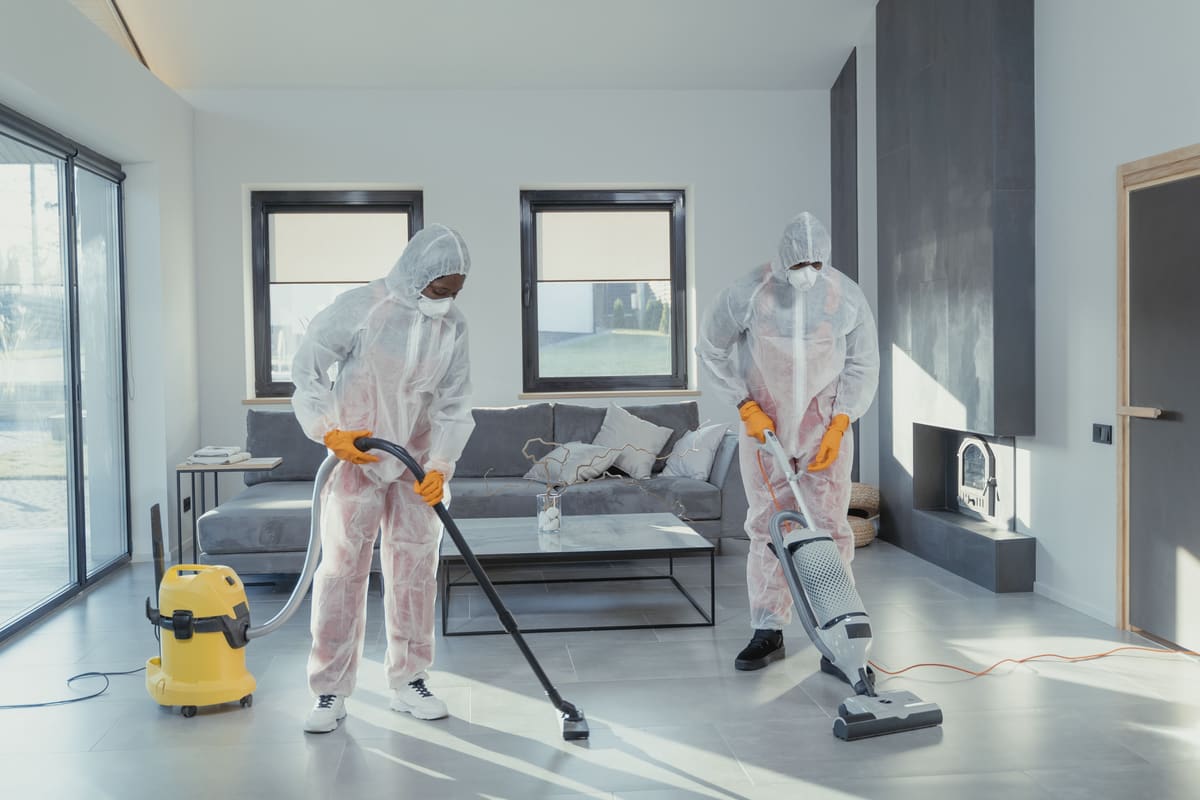
Stock photo: Tima Miroshnichenko / Pexels.
How smoke from a neighbor's fire gets into your apartment
The FDNY's own Fire Safety Notice gives the answer. The city's Fire Code requires the notice on the inside of every apartment entrance door, according to HPD, and it comes in two versions, one for fireproof (non-combustible) buildings and one for non-fireproof (combustible) ones. Both tell residents who stay inside during a fire elsewhere in the building to seal the apartment doors with wet towels or sheets, and to seal air ducts or other openings where smoke may enter. That list doubles as a map of how smoke gets in.
Hallways and stairs are the other route. Smoke from a fire apartment with its door left open can fill the hall. The FDNY notice tells anyone leaving a burning apartment to close the door behind them, and city law backs that up with self-closing doors. Under Local Laws 62 and 63 of 2022, doors that open onto interior corridors or stairs in apartment buildings must close and latch on their own, and an owner who doesn't keep them in good repair faces a Class C immediately hazardous violation from HPD, with 14 days to correct it.
Inside the walls, smoke can also travel along pipe chases, utility shafts and the gaps where pipes pass through floors, so an apartment two floors away can smell worse than the one next door. Some fires push smoke harder than others; e-bike battery fires are one example.
What is considered smoke damage?
In practice, smoke damage is anything smoke left behind that won't air out on its own:
- Soot film on walls and ceilings, often darkest around vents, outlets, door frames and window sills.
- Odor in carpet, upholstery, mattresses, curtains and the clothes in your closets.
- Residue in the air conditioner or the duct openings, which can push the smell back into the room every time it runs.
- Discoloration on paint, plastics, grout and blinds.
- Water damage from firefighting, if the fire was above you.
The U.S. Fire Administration's recovery guide makes the point that things a fire never touched can still be ruined by smoke, and warns that soot and the dirty water left behind may contain things that could make you sick. Keep children and pets off sooty floors and furniture until they have been cleaned.
Document it before you clean: photos of every wall, vent and closet, a note of what you smell and where, and the date. Tell your landlord or managing agent in writing.
Water from firefighting in the apartment below
If the fire was above you, water may be the bigger problem. Hose water can soak through floors, come through ceilings and light fixtures, and run inside the walls. Stay out from under a sagging ceiling, keep away from wet outlets and fixtures, and read water leaking from the apartment upstairs for who to call in a building.
Then the drying clock starts. The EPA says that in most cases mold won't grow if wet or damp items are dried within 24 to 48 hours. Water that came through a burned apartment isn't clean, so a box fan isn't the answer yet: the EPA's guidance is to wait on fans until you know the water is clean or sanitary.
For that part, our 24/7 water damage restoration tracks down each place the water reached and dries all of it before any repairs begin.
Smoke damage cleanup in an apartment: what to do and what to leave
Some of it you can start on once the building is clear:
- Open the windows to air the apartment out, if the air outside is clear of smoke.
- Keep the air conditioner off until its filter and the unit itself are cleaned, so it doesn't keep blowing residue around.
- Bag clothes and bedding that smell of smoke, and keep them away from clean laundry. A light smell often washes out; heavily sooted fabric does better with professional cleaning.
- Throw out exposed food. The USDA's Food Safety and Inspection Service says to discard food exposed to smoke fumes from a fire.
And some of it is better left alone:
- Don't wipe the black film with water or an all-purpose spray. Oily soot tends to smear into a streak and sink into flat paint.
- Don't paint over soot or smoke stains. The stain and the smell can come back through new paint.
- Don't count on sprays or an ozone machine. Fragrance covers the smell for a while; our guide to the fire damage restoration process explains what the EPA says about ozone.
When the film covers whole rooms, or the smell is in the closets and the furniture, that is the work of our fire and smoke damage restoration. GlobePro Restoration removes the damaged items, clears the area, gets rid of the soot and the smoke odor, and restores your home. Call (929) 969-2534 at any hour.
Who pays for smoke damage from a neighbor's fire?
That depends on what was damaged and whose policy covers it, so start with the documents, not assumptions.
- The building. DFS says the owner of a rented building may have insurance on it, and fire or water damage to the structure is the owner's claim.
- Your belongings. A landlord's insurance doesn't protect a tenant's personal property, according to DFS. Renters insurance typically covers smoke and fire, and may pay living expenses if you have to stay elsewhere during repairs.
- Co-ops and condos. The proprietary lease or the bylaws set out who repairs what. Ask the managing agent, and call your own insurer.
- The neighbor's policy. Whether it comes into play depends on the policies and the facts. That is a question for your insurer.
If water came through too, our guide to water damage insurance claims in New York covers the paperwork. And if smoke or water leaves your apartment unlivable, the American Red Cross and HPD's Emergency Housing Services help households displaced by fires.
Frequently asked questions
What is considered smoke damage?
Anything smoke leaves behind that won't air out: soot film on walls and ceilings, odor in fabric and carpet, residue in vents and the air conditioner, and discoloration on paint and plastics. In the apartments below a fire, water from firefighting often comes with it.
Who pays for smoke damage in a rented apartment?
DFS says damage to the structure is the building owner's claim. A landlord's insurance doesn't protect your furniture, clothes and other belongings, according to DFS; that is what renters insurance is for.
How long does smoke smell last after a fire next door?
Until the residue holding it is cleaned out. Airing the apartment helps with a light smell, but odor in carpet, closets, upholstery and the air conditioner usually stays until those are cleaned.
Should I stay in my apartment if there is a fire in my building?
Read the Fire Safety Notice on the back of your apartment door. When the fire isn't in your apartment, the FDNY's notice for fireproof buildings says to stay inside unless conditions become dangerous, and the one for non-fireproof buildings says to leave if you can do so safely.
Does GlobePro Restoration work with my insurance company?
Yes. GlobePro Restoration works with your insurance company to make the process as smooth as possible, and after a fire we can keep in contact with your insurer to ease the burden.
Smoke in your apartment now?
GlobePro Restoration is open 24 hours a day, 7 days a week. Call (929) 969-2534 or send a request.
More from the blog
- Mold Testing vs. Remediation on Long Island: Why NY Wants Two Firms
- Smoke Damage Insurance Claim in New York: What to Document Before Cleanup
- What Is Water Damage Restoration? Mitigation, Drying and Repairs Explained
- Does Homeowners Insurance Cover Sewer Backup in New York?
- Water Damage Insurance Claim in New York: The Photos, Readings and Paperwork to Keep