Water Damage Insurance Claim in New York: The Photos, Readings and Paperwork to Keep
A water damage insurance claim in New York goes best when you report it quickly, photograph everything before cleanup, stop the damage from spreading, and hold off on permanent repairs until the insurer has inspected. Those steps come straight from New York's Department of Financial Services (DFS). The rest of a strong claim is paperwork: a room-by-room inventory, receipts, a written record of every call, and anything that shows the water was sudden and accidental rather than a slow leak.
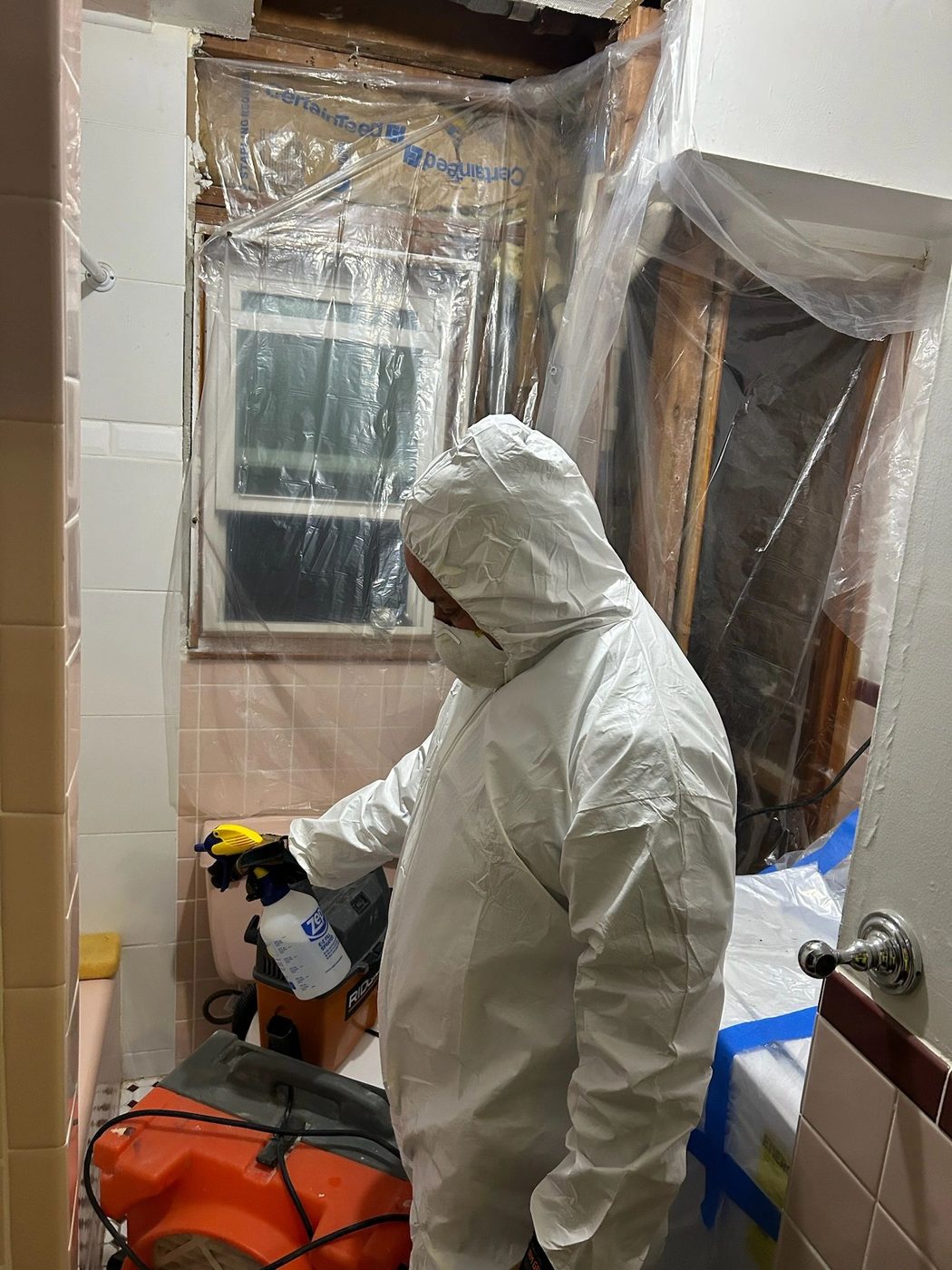
A GlobePro Restoration technician setting up containment and drying in a water-damaged bathroom.
Report the water damage insurance claim and start a written record
DFS's homeowners and tenants guide says the first thing to do after a loss is notify your insurance company or agent. You can call, but follow up in writing and keep copies of everything.
Its storm and flood recovery guide adds the habits that keep a claim on track:
- File as soon as possible after the loss.
- Ask the insurer exactly which documents, forms and data it will need.
- Keep a record of every conversation, with the person's name and the time and date of each call.
- After a phone call or an adjuster's visit, follow up in writing with your understanding of what was said.
One notebook or one email thread is enough. Start it with when the water started, when it stopped, and who shut it off.
What to photograph before anything is thrown out
DFS says to take photos or video showing the extent of the damage before cleaning anything up. Before you mop, move or bag anything, get:
- The source. The burst pipe, the split hose or the overflowing fixture, close up and in a wide shot.
- The spread. Every wet room, the ceiling of the unit below, and any water line on the walls.
- Each damaged item, with brand, model and serial number labels where you can find them.
- The progress. Phone photos usually carry a date and time, so keep shooting as a stain spreads or as the drying goes on.
Then build the inventory. DFS asks for a room-by-room list of damaged items, with receipts, credit card statements or other documents showing what they were worth, and says to keep the damaged property itself until the claim is settled.
Some things can't wait for the adjuster. DFS's disaster FAQ says it is fine to remove water-logged sheetrock or rugs when that is needed to protect health or safety, as long as you document the damage first and save receipts for the emergency work.
Stop the damage without destroying the evidence
DFS expects you to protect your property from further damage. Its guide says the cost of that kind of protection is generally covered by the policy and tells you to save every receipt for temporary fixes. It also says no permanent repairs should be made until the insurer or its representative has inspected, because the company can refuse to pay for damage repaired before then.
The Insurance Information Institute makes the same point from the other side: an adjuster doesn't need to see the spill before you act, but will want to inspect the damaged items.
With water, further damage is mostly a matter of time. The EPA says that in most cases mold will not grow if wet or damp items are dried within 24 to 48 hours, and the Insurance Information Institute lists mold, along with damage from lack of maintenance, among the things a typical homeowners policy won't cover.
Plaster and drywall can feel dry on the surface while still wet inside, so drying should be measured, not guessed. Ask whoever handles the drying for the moisture readings and the dates they were taken, and keep them in your claim file.
GlobePro Restoration finds every place the water got in and dries out all the affected areas. Once everything is dry, the repairs begin. For 24/7 water damage restoration, call (929) 969-2534, and we work with your insurance company to make the process as smooth as possible.
Sudden vs. gradual: why the cause of a leak matters
A water claim often turns on one question: how did the water get there?
- Sudden and accidental. The National Association of Insurance Commissioners (NAIC) says homeowners policies cover damage from a "sudden and accidental" discharge from a plumbing system. A supply line that bursts or a washing machine hose that splits is the kind of event that wording describes.
- Lack of maintenance. The Insurance Information Institute says a policy will not cover damage due to lack of maintenance. A drip that has soaked a subfloor for months is the kind of loss an insurer may look at that way.
- Freezing. The NAIC says that if your insurer decides you neglected your plumbing by not taking steps to prevent freezing, burst-pipe damage may not be covered, and that policies generally require a minimum temperature or a water shutoff in a vacant home.
- Flood and sewer backup. These sit outside a standard homeowners policy. Flood coverage comes from a separate flood policy, and sewer backup coverage from an endorsement or a separate product.
Anything that dates the damage helps: the day you first noticed the stain, your photos, the super's work order, a 311 complaint number, the plumber's invoice naming what failed. If the leak was hidden inside a wall, write down when and how you found it. For the first hour after a pipe lets go, see our burst pipe guide. If the water came from a neighbor, who pays for a leak from upstairs explains how responsibility usually splits.
The adjuster visit and your own estimate
According to DFS's page on adjusters, appraisers and umpires, your insurer sends an adjuster to examine the damage and estimate the cost of repair or replacement. You may get an estimate from your own contractor to compare, and your agent or broker can help with forms and documents, but it is your responsibility to prove your loss.
Be there for the visit if you can, walk the adjuster through your photos and inventory, and put your understanding of the visit in writing afterward. If you disagree with the result, DFS suggests:
- Ask to see the specific policy language if the adjuster says something isn't covered.
- Ask for a sit-down with your contractor and the adjuster to go through the estimate line by line, and get a second opinion from an independent contractor.
- If the insurer denies the claim, it should give a reason supported by the policy's language. You can file a complaint with DFS.
- If you can't agree on the amount, your policy provides an appraisal process: each side picks an appraiser, and the two appraisers pick an umpire. DFS notes it isn't available for disputes over what caused the damage.
Public adjusters: what New York requires
A public adjuster works for the policyholder, not the insurer. DFS's rules:
- Public adjusters must be licensed by DFS, which lists them in its "Who We Supervise" lookup.
- Their fee is negotiable but by law can't be more than 12.5% of the recovery.
- They need a signed compensation agreement stating the fee, and you can cancel it without penalty up to midnight of the third business day after signing.
- They may not solicit your business between 6 p.m. and 8 a.m.
- You owe the agreed fee whatever the outcome.
Frequently asked questions
How long do I have to file a water damage insurance claim in New York?
Your policy sets the deadlines, so read its conditions. DFS's advice is to notify the insurer as soon as possible after the loss, by phone and then in writing.
Can I throw away wet carpet and drywall before the adjuster comes?
DFS says removing water-logged sheetrock or rugs is fine when it is needed for health or safety, once you have documented the damage. Keep damaged personal property until the claim is settled, and save receipts for the emergency work.
Will filing a water claim affect my insurance?
It can. DFS notes that some carriers limit how many claims you can file before treating you as a higher risk, which can lead to non-renewal, and that water loss claims can affect whether a property is seen as higher risk. Whether to file is your decision.
Will insurance pay for a hotel while the water damage is repaired?
DFS says homeowner and tenant policies generally reimburse added living expenses when a covered loss leaves your home uninhabitable, but only the difference between your normal costs and the extra ones. Keep every receipt.
Does GlobePro Restoration work with my insurance company?
Yes. GlobePro Restoration works with your insurance company to make the process as smooth as possible.
Water damage to document right now?
GlobePro Restoration is based in Brooklyn and serves New York City 24 hours a day. Call (929) 969-2534 or send a request.
More from the blog
- Mold Testing vs. Remediation on Long Island: Why NY Wants Two Firms
- Smoke Damage Insurance Claim in New York: What to Document Before Cleanup
- What Is Water Damage Restoration? Mitigation, Drying and Repairs Explained
- Smoke Damage Cleanup in an NYC Apartment After a Neighbor's Fire
- Does Homeowners Insurance Cover Sewer Backup in New York?