The Fire Damage Restoration Process, Step by Step: From Board-Up to Smoke Odor
The fire damage restoration process follows a fixed order: confirm the building is safe to enter, secure it, dry out the water used to fight the fire, clean the soot surface by surface, remove the smoke odor, and sort the belongings that can be saved. Repairs and rebuilding come after all of that. Skipping ahead, by painting over soot or throwing things out before your insurer has seen them, can cost you later.
GlobePro Restoration is a 24/7 restoration company based in Brooklyn. Here is how each stage works in a New York City house or apartment, and what to settle with your insurer along the way.
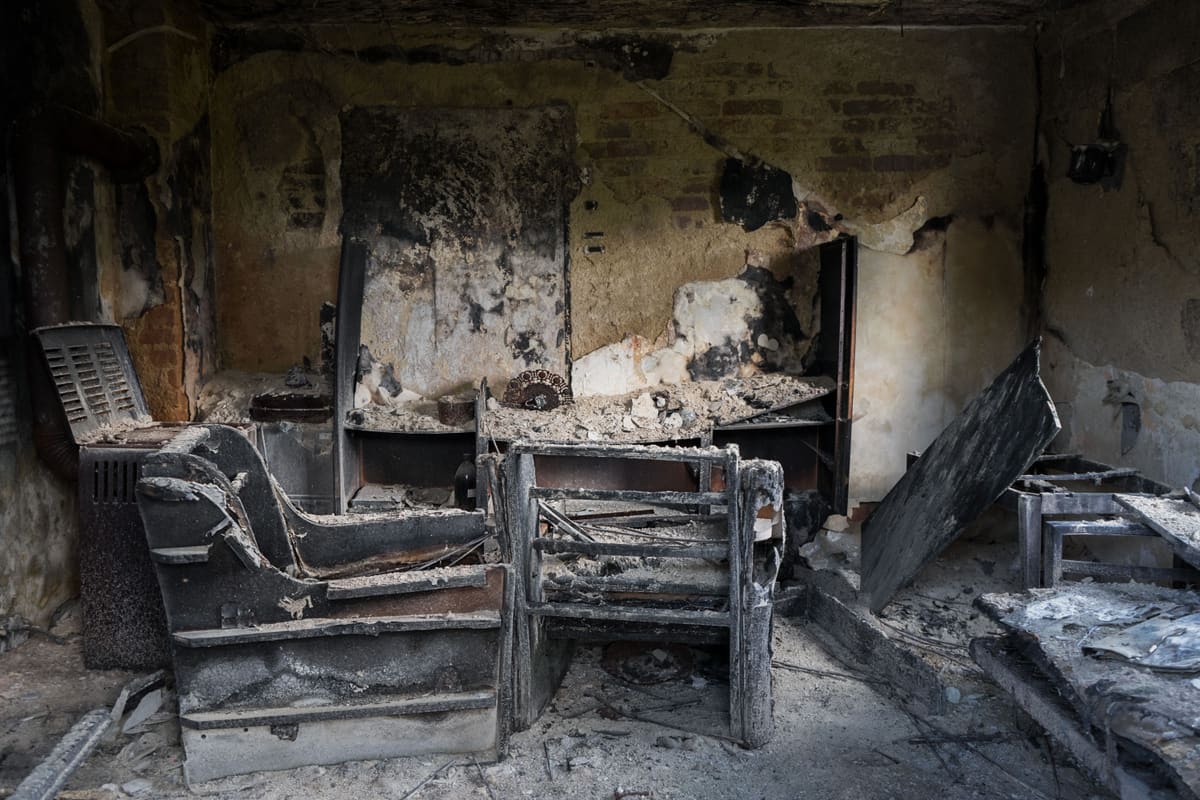
Stock photo: F. Hektor / Pexels.
Step 1: Is it safe to go back in?
Not until the fire department says it is. The U.S. Fire Administration's recovery guide, After the Fire, says not to enter a damaged home or apartment without that all-clear, and to move carefully once you do, because floors and walls may be weaker than they look. The fire department also checks the water, electricity and gas. If a utility isn't safe, firefighters have it shut off before they leave, and you shouldn't turn it back on yourself.
New York City can add one more gate. When a building or an apartment is unsafe to occupy, the Department of Buildings can issue a vacate order, and while it is in effect you can't go inside without DOB's approval. If you can't go home, the city's vacate order page points to two places for help: the American Red Cross, and HPD's Emergency Housing Services unit, which assists eligible households displaced by fires.
Step 2: Secure the property and call your insurer
Putting a fire out can mean opening the building up. USFA explains that firefighters may break windows and cut holes in the roof, which slows the fire and lets out the dark smoke that makes it hard for them to see, and may cut into walls to make sure no fire is hiding inside. That can leave a home open to rain, cold and anyone passing by.
New York's Department of Financial Services says the first thing to do after a loss is notify your insurance company or agent: call, then follow up in writing and keep copies. DFS also says to protect the property from further damage, and gives boarding up broken windows as its example of protection a policy generally covers. Keep receipts for every temporary fix. Permanent repairs wait, because the insurer has the right to inspect the property in its damaged condition and can refuse to pay for damage repaired before then.
Two more calls come from USFA's checklist: report the fire to your landlord or mortgage company, and if the home will sit empty, let the police know.
Going through a fire is hard enough. GlobePro Restoration can keep in contact with your insurance company to ease the burden, and we work with your insurer to make the process as smooth as possible.
Step 3: Dry the water used to fight the fire
The hose line does its own damage. USFA notes that things the flames never touched can still be ruined by smoke and soggy with the water used to put the fire out. In an apartment building, that water can run down through the floors into the units below. If it came through your ceiling, read water leaking from the apartment upstairs; in a brownstone or walk-up, how water moves through Brooklyn rowhouses and walk-ups shows where it tends to end up.
Wet drywall, plaster, insulation and floors need drying like any other water loss, and on the same clock. The EPA says that in most cases mold won't grow if wet or damp items are dried within 24 to 48 hours. Water that ran through a burned room isn't clean, though. USFA warns that the soot and dirty water a fire leaves behind may contain things that could make you sick, and the EPA's advice is to hold off on fans until you know the water is clean or sanitary.
On the water side, our 24/7 water damage restoration works the way it does after a burst pipe: we find every place the water got in and dry out all the affected areas.
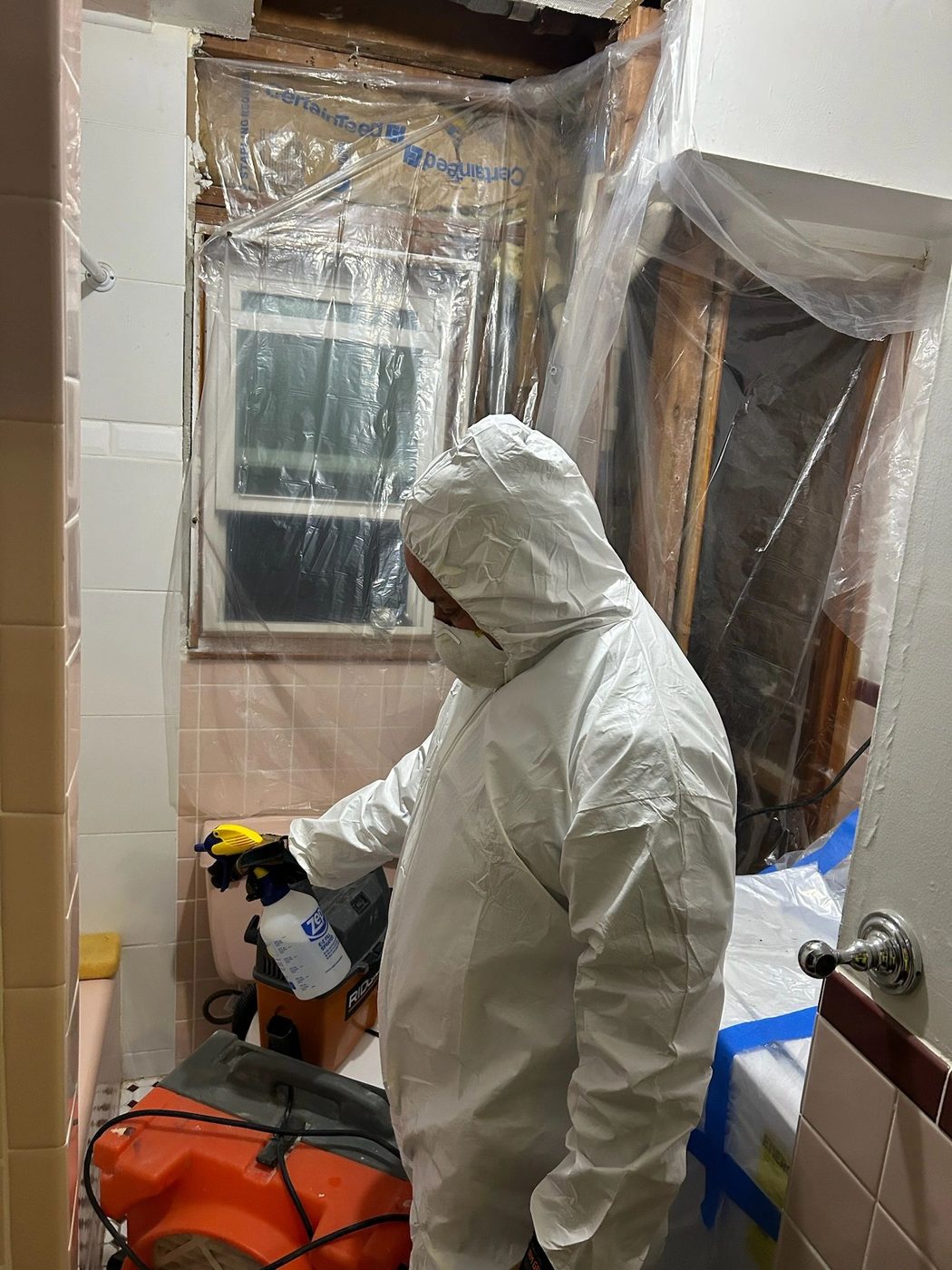
A GlobePro Restoration technician setting up containment and drying in a water-damaged bathroom.
Step 4: Soot, the longest part of fire damage restoration
Soot isn't one substance. What burned decides what settles on the walls, and that decides how it comes off.
- Dry, powdery soot usually comes from a fast, hot fire in paper or wood. It can often be vacuumed and dry-cleaned off a surface before anything wet touches it.
- Oily black soot usually comes from burning plastic, foam and synthetic fabric. It smears when wiped, so it needs a cleaner that cuts the film.
- Cooking residue from burned food and grease can be a thin, yellowish film that is hard to see and easy to smell.
- Porous surfaces such as flat paint, unsealed wood, brick, grout and fabric hold soot deeper than glass, metal, glazed tile or gloss paint.
That is why a wet sponge on a sooty wall is a common mistake: on oily soot it spreads a thin film and works it into the paint. Cleaning runs from the ceiling down, so finished surfaces don't get dirty again, and nothing gets painted until the residue is off. Paint over soot and the stain and the smell can come back through.
That cleaning is the core of fire and smoke damage restoration at GlobePro Restoration. We remove the damaged items, clear the area, get rid of the soot and the smoke odor, and restore your property. Every job is quoted individually; call (929) 969-2534 at any hour to talk it through.
Step 5: Removing the smoke odor
Smoke odor sits wherever the residue sits: in upholstery, carpet and insulation, inside closets and cabinets, and in the gaps around pipes and outlets. Sprays and candles cover it for a while. The smell goes when the residue goes, which is why odor work comes after cleaning, not instead of it.
If the building has forced-air heat or central air, the ducts can carry smoke into every room. They should be cleaned before the system runs again, or the next cycle can spread the smell through the house.
Be careful with ozone machines sold to kill smoke smell. The EPA says that at concentrations that don't exceed public health standards, ozone has little potential to remove indoor air contaminants and isn't effective against many odor-causing chemicals. It also says breathing ozone can damage the lungs, and that no federal agency has approved these devices for use in occupied spaces.
Step 6: Sorting belongings into clean, restore or replace
USFA says there are companies that specialize in cleaning and restoring personal items. Before you hire one, make sure you know whether you or your insurer will pay for the cleaning, and get the company's cost estimate in writing.
Hard, sealed things like dishes, glass, metal and finished wood often clean well. Upholstery, mattresses, books and clothing depend on how much smoke and water they took in. Food is the exception: the USDA's Food Safety and Inspection Service says to throw out food exposed to smoke fumes, which can get through cardboard and plastic wrap and even into a refrigerator, because its seal isn't airtight.
For everything else, wait for the adjuster before throwing it out, and keep a room-by-room list with photos. The DFS guide is plain about who carries that work: it is up to you to prove your loss to the insurance company.
Public adjusters: what New York's rules say
After a large fire you may hear from public adjusters offering to handle the claim for you. In New York they are licensed by DFS, and they represent you, not the insurance company. According to DFS, their fee is usually a negotiable percentage of what you recover and by law can't be more than 12.5%. You can cancel the agreement without penalty until midnight of the third business day after signing, and they may not solicit your business between 6 p.m. and 8 a.m.
DFS also notes that many people settle property claims directly with the insurer's assigned adjuster, and that whatever the outcome, a public adjuster's agreed fee is still owed. Read the agreement before you sign it.
Frequently asked questions
Who cleans up after a house fire?
If you own the home, you arrange the cleanup, ideally after your insurer tells you what it needs first. If you rent, DFS says the building owner may have insurance on the building, but the landlord's insurance won't protect your belongings; a renters policy is what covers your own things.
Does insurance cover fire damage restoration?
Fire and smoke damage appear on the list of perils in even the basic homeowners policy DFS describes, but what your policy pays depends on its wording and limits. Ask before work starts who pays for cleaning, and keep every receipt.
Can I live at home during fire damage restoration?
Only if the fire department, and the Buildings Department if it issued a vacate order, allow it. DFS says homeowners and tenant policies generally reimburse higher living costs when your insurer determines the home is uninhabitable because of a covered peril, but only the difference above your normal expenses.
Can a fire-damaged house be repaired?
Often, depending on how far the fire reached into the structure. Cleaning and drying come first, the insurer's inspection then sets the scope of repairs, and DFS says permanent repairs should wait until that inspection.
Does GlobePro Restoration talk to my insurance company?
Yes. After a fire, GlobePro Restoration can keep in contact with your insurance company to ease the burden.
Dealing with fire damage now?
GlobePro Restoration is open 24 hours a day, 7 days a week. Call (929) 969-2534 or send a request, and see everything else we do on the services page.
More from the blog
- Basement Flooding Cleanup in Queens: What Ida Taught Woodside, Flushing and Hollis
- Oil Burner Puffback Cleanup: Soot After the Heat Kicks On
- Sewer Backup in NYC: Sewage Cleanup, Who to Call and How to File a Claim
- Water Damage Restoration on Staten Island: Detached Homes, Basements and the South Shore
- Water Damage Restoration in Manhattan: Co-ops, Condos and Prewar Walk-Ups