What Is Water Damage Restoration? Mitigation, Drying and Repairs Explained
Water damage restoration is the work of taking a building from wet back to normal after water gets in. It runs in a set order: stop the water, work out how contaminated it is, take out what can't be saved, clean what needs cleaning, dry everything to a measured goal, and then repair. The emergency first half is usually called mitigation. Restoration is the whole job, repairs included.
Most of the job happens before anything looks fixed. That is why a room can sit with fans running and holes in the wall for days, and why skipping a stage tends to show up later as a stain, a smell or mold.
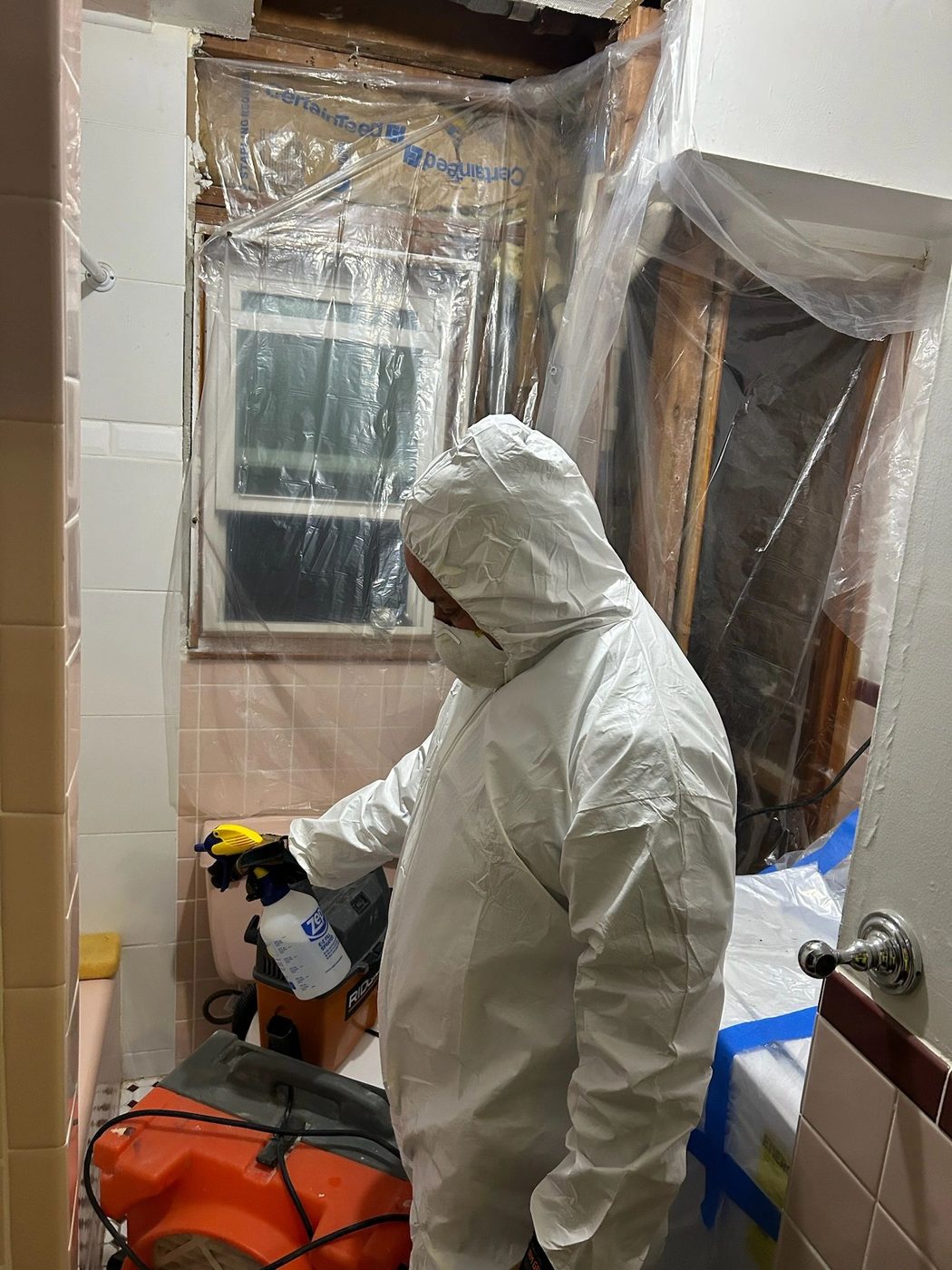
A GlobePro Restoration technician setting up containment and drying in a water-damaged bathroom.
What water damage restoration includes
A full job, start to finish, usually covers seven pieces of work:
- Stopping the source and making the space safe to work in.
- Inspection: finding every place the water reached and deciding what kind of water it is.
- Extraction: pumping or vacuuming out standing water.
- Removal of soaked materials that can't be dried.
- Cleaning and sanitizing, which has to come before drying when the water was dirty.
- Drying and monitoring until readings show the materials are dry.
- Repairs: new drywall, flooring, paint and anything else that had to come out.
The trade's reference for this work is the IICRC's S500 standard for professional water damage restoration. Its list of what a restorer should do on the first visit reads like a checklist: a site safety survey, confirming where the water came from, mapping how far it traveled, a preliminary call on the category of water, noting damage that was already there, and setting the drying goals the job will be measured against.
Water damage mitigation vs restoration
Mitigation is the part that keeps a bad day from getting worse. It usually covers stopping the water, getting it out, pulling up wet carpet, cutting out soaked drywall and setting up drying equipment. Restoration is the full process, which ends with the repairs.
The line between the two matters most for insurance. New York's Department of Financial Services says the first thing to do after a loss is notify your insurer. It also says to protect the property from further damage, that the cost of that protection is generally covered by the policy, and to save every receipt for temporary fixes. Permanent repairs should wait until the insurer has inspected; the company can refuse to pay for damage repaired before then.
Put simply: mitigate now, document everything, and hold the rebuild until the adjuster has seen the damage.
Each stage of water damage restoration, in order
1. Stop the water and make it safe
Close the nearest valve, or get the super or building staff to close the one you can't reach. Stay away from wet outlets, light fixtures and the breaker panel, and out from under a sagging ceiling. If a pipe let go inside your apartment, our guide to a burst pipe in an NYC apartment walks through the first hour.
2. Inspect, and decide the category
Water rarely stays where it lands. It runs along floor framing, wicks up into drywall and drops into the room below. Inspection follows it with moisture readings until the edge of the wet area is found, including inside walls and in the apartment underneath.
The same visit settles the category. Under S500, Category 1 is water from a clean source, such as a broken supply line. Category 2 carries significant contamination, such as discharge from a washing machine or dishwasher. Category 3 is grossly contaminated: its examples include sewage, waste-line backflow from beyond a trap, seawater flooding and rising river water. A position statement the S500 consensus body issued on March 16, 2026 adds that rain and other weather-related water are not automatically Category 3. What decides it is whether the water is grossly contaminated.
3. Extract standing water
Pumps and water-extraction vacuums take out the bulk of it. That step alone doesn't dry anything. The EPA's guidance on drying notes that wet vacuums will not dry carpet on their own: the carpet and pad have to be pulled up and dried separately.
4. Remove what can't be saved
Some materials dry in place and some don't. The EPA says drywall can be dried in place if there is no obvious swelling and the seams are intact; otherwise it has to come out. Its list of items that may have to be thrown away includes ceiling tiles, cellulose and fiberglass insulation, drywall, and books and papers.
5. Clean and sanitize
When the water was dirty, cleanup comes before drying. For Category 2 and 3 water, S500 says remediation should happen before restorative drying, with contamination controls and worker protection in place. The EPA's advice points the same way: don't use fans until you have determined that the water is clean or sanitary. Moving air can spread whatever is in the water around the room.
6. Dry and monitor
Dehumidifiers pull moisture out of the air, and fans move dry air across wet surfaces. The EPA calls the inside of a wall the hardest place to dry and says the cavity should be ventilated if the drywall is left in place.
Drying is checked with readings, not by touch. A Texas A&M AgriLife Extension flood-recovery guide says wood framing should be below 15 percent moisture content before insulation, drywall or paneling goes back on, and that the studs should be tested with a moisture meter.
7. Repairs
Once everything is dry, the repairs begin: the drywall, flooring, trim and paint that came out in stage four go back in. This is also the stage that waits on your insurer's inspection.
What a New York City building adds
The stages don't change in New York, but the building usually makes each one bigger.
- More than one apartment. Kitchens and bathrooms are often stacked on the same vertical lines, so one failure can wet several units, and each one needs its own inspection and drying plan.
- Older walls. Many prewar buildings have plaster rather than drywall. Plaster can often be dried rather than replaced, but it can take longer than drywall, so it needs readings rather than guesses.
- Radiators. Heat season runs October 1 to May 31, according to HPD, and steam systems add one more way for water to get into floors and ceilings.
- Sewers. About 60 percent of the city's sewer system is combined, carrying sewage and stormwater in the same pipes, and DEP says wet-weather backups are now the majority. Sewer water backing up through a basement drain falls under one of S500's Category 3 examples, waste-line backflow from beyond a trap.
- More people to call. The super or managing agent, the neighbor below, your insurer and, in a co-op or condo, the board. For how this plays out in rowhouses, garden floors and walk-ups, see water damage restoration in Brooklyn.
How GlobePro Restoration handles water damage
GlobePro Restoration is a 24/7 restoration company based in Brooklyn, serving New York City and the surrounding areas. On a water job we find every place the water got in and dry out all the affected areas. Once everything is dry, the repairs begin. We also work with your insurance company to make the process as smooth as possible.
There is no price list. Every job is quoted on its own, because the category, the materials and the size of the wet area are different every time. If water is in your home or building now, start with our 24/7 water damage restoration service.
Frequently asked questions
What is the difference between water removal and water damage restoration?
Water removal, or extraction, is one stage of the job. Restoration covers all of it: inspection, removal of damaged materials, cleaning, drying to a measured goal, and the repairs at the end.
Is water damage restoration covered by insurance?
It depends on the cause and your policy. DFS lists accidental discharge or overflow of water or steam from plumbing, heating, air conditioning or sprinkler systems among the perils a broad form homeowners policy covers, while flood is excluded from standard policies and sold separately through the National Flood Insurance Program. Read your own policy and ask your insurer.
Can I dry out water damage myself?
A small clean-water spill found right away, often yes. The EPA's drying guidance is written for clean water. If sewage or chemicals are involved, it says protective equipment and containment are required, and fans should stay off until the water is known to be clean.
How do I know when everything is dry?
By measurement. Wood framing should read under 15 percent moisture content before walls are closed, according to Texas A&M AgriLife Extension, and the EPA says in most cases mold will not grow if wet items are dried within 24 to 48 hours.
Will GlobePro Restoration deal with my insurer?
Yes. We work with your insurance company to make the process as smooth as possible.
Water in your building right now?
GlobePro Restoration takes calls around the clock. Call (929) 969-2534 or send a request. The rest of what we do is on the services page.
More from the blog
- Mold Testing vs. Remediation on Long Island: Why NY Wants Two Firms
- Smoke Damage Insurance Claim in New York: What to Document Before Cleanup
- Smoke Damage Cleanup in an NYC Apartment After a Neighbor's Fire
- Does Homeowners Insurance Cover Sewer Backup in New York?
- Water Damage Insurance Claim in New York: The Photos, Readings and Paperwork to Keep