Burst Pipe in Your NYC Apartment: The First Hour, Step by Step
A pipe burst in your NYC apartment is an emergency. Water in a supply pipe is under pressure, so it keeps coming until someone closes a valve, and in an apartment building it can reach the floors below. In the first hour: stop the water or get the super to stop it, stay clear of anything electrical that's wet, photograph the damage before you move it, warn the neighbor below, and get the drying started.
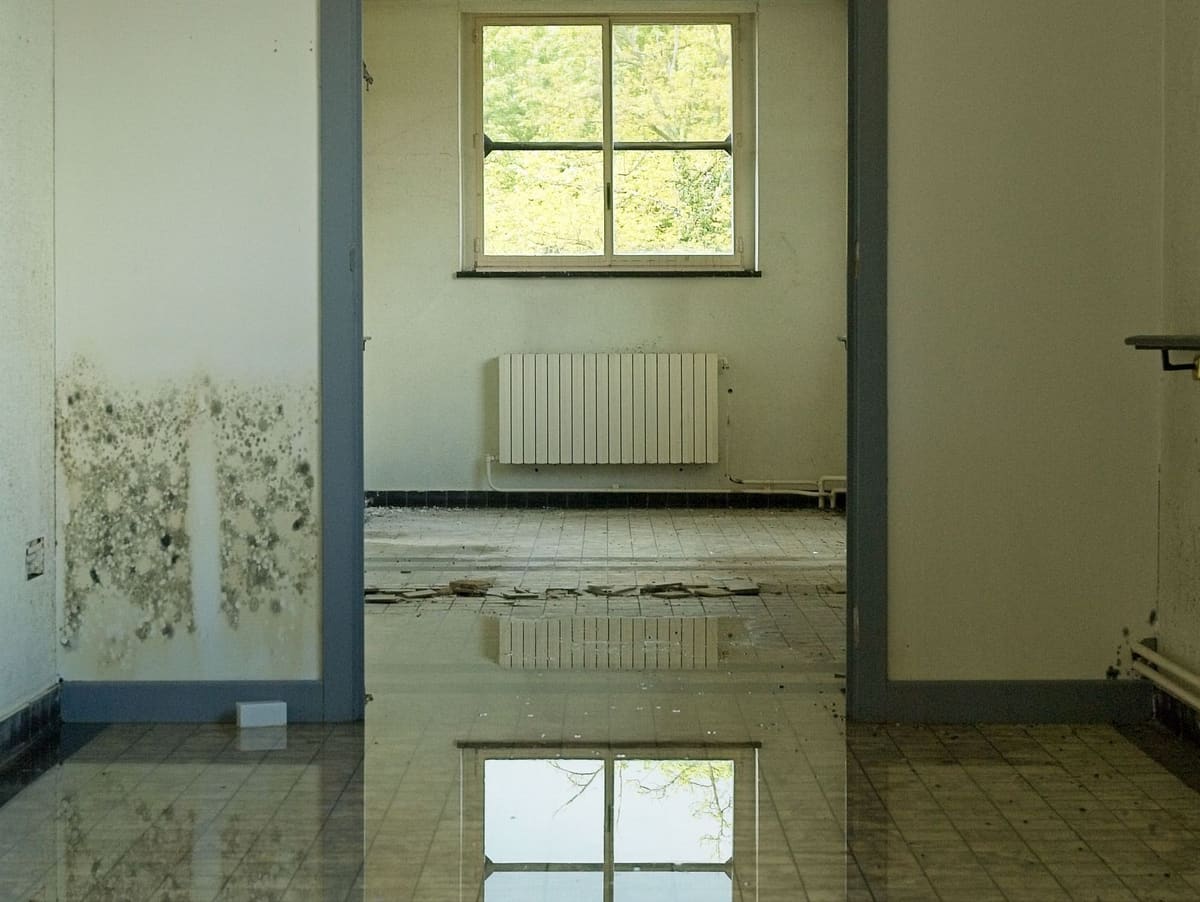
Stock photo: Emmanuel Codden / Pexels.
Is a burst pipe an emergency?
Yes, for two reasons: how far the water travels, and how fast the clock runs. In August 2026, News 12 Brooklyn reported that a burst pipe in a Clinton Hill apartment building sent water through multiple floors for nearly eight hours, flooding hallways, stairwells and apartments. That is how far one pipe's water can go in a building.
The clock is mold. The EPA says that in most cases mold will not grow if wet or damp items are dried within 24 to 48 hours. Every hour the water sits uses up part of that window.
If water is coming through a light fixture, pooling near outlets or the breaker panel, or a ceiling is bulging, stay out from under it and away from it. 311's own guidance is to call 911 if there is immediate danger.
Burst pipe in an NYC apartment: where the shutoff is
Close the nearest valve you can reach, then work outward.
- Under the sink, behind the toilet, behind the washing machine. Many fixtures have a small valve on the supply line that feeds them. Turn it clockwise, or a quarter turn for a lever handle, until it stops.
- Inside a wall or ceiling. The valve for a pipe in the wall may be behind an access panel, in a utility closet or down in the basement, and in many buildings only the super or building staff can reach it. That is why tenants often can't stop a burst pipe on their own.
- A house, brownstone or two-family home you own. The main shutoff is usually near where the water line enters the building, often by the meter. NYC's Department of Environmental Protection says homeowners are responsible for protecting their pipes and water meter from freezing, and that if a pipe freezes and breaks, the homeowner has to have it repaired by a licensed master plumber.
- A radiator or steam pipe. Heat season runs October 1 to May 31, according to HPD, and steam burns, so don't grab the valve. Our guide to radiator and steam pipe leaks in NYC apartments covers that case.
Before anything breaks, ask your super where the valves for your line are and how to reach building staff after hours.
Who to call first, in order
1. 911, if there is immediate danger. That is 311's own advice, and it comes before everything else. 2. Your super, landlord or managing agent. In a co-op or condo, call management or the board. The 311 guidance on leaks is to start with them, and they can usually get to the valves you can't. 3. 311, if the building doesn't respond. A 311 complaint about a leak inside an apartment goes to HPD, which contacts the managing agent, calls you back, and can send an inspector if the problem isn't fixed. 4. The neighbor below. Knock, tell them what happened, and tell management. If the water is coming from above you instead, read water leaking from the apartment upstairs. 5. Your insurer. New York's Department of Financial Services says notifying your insurance company or agent is the first thing to do after a loss. Call, then follow up in writing and keep copies. 6. Someone to start the drying. DFS also says to protect your property from further damage and to save receipts for temporary fixes. For 24/7 water damage restoration, GlobePro Restoration answers (929) 969-2534 at any hour, and we work with your insurance company to make the process as smooth as possible.
What to photograph for your insurer
DFS's storm and flood recovery guide says to take photos or video showing the extent of the damage before cleaning anything up, and to give your insurer a room-by-room inventory of damaged items with receipts, credit card statements or other proof of value. Before you mop or move anything, get:
- The pipe or fitting that failed, close up, and a wide shot of the room.
- Standing water on the floor, and the wet ceiling and walls of the unit below if you can get in.
- Every damaged item, with brand and model labels where you can find them.
- The time the water started and stopped, and the name of everyone you spoke to.
Make only the repairs needed to stop further damage. DFS says permanent repairs should wait until your insurer has inspected, that the company can refuse to pay for damage repaired before then, and that damaged belongings should be kept until the claim is settled.
Whose policy pays is a separate question. DFS says a landlord does not provide insurance for a tenant's personal property. In a co-op, Habitat magazine notes that a leaking radiator inside a unit is almost always the shareholder's responsibility and a neighbor's overflowing or broken fixture is the neighbor's, though it depends on the proprietary lease. Your lease and your policy decide, so ask your insurer rather than assuming.
How drying works when the water went into the apartment below
Water from a burst pipe goes down. It can soak into your floor, come through the ceiling of the apartment below, and run into the walls in between, so both apartments, and sometimes the hallway, may need drying.
GlobePro Restoration finds every place the water got in and dries out all the affected areas. Once everything is dry, the repairs begin. Getting into the apartment below takes that neighbor's or management's OK, so bring them in early.
The kind of water decides how the drying is done. A supply line carries clean water, what the industry calls Category 1. A cracked drain or waste line is different: under the IICRC's S500 standard, waste-line backflow from beyond the trap is one of the examples of Category 3, grossly contaminated water, and for contaminated water the standard puts cleanup before drying. The EPA says not to use fans until you have determined that the water is clean or sanitary.
Plaster and drywall can feel dry on the surface while still wet inside, so don't repaint a stained ceiling because it looks dry.
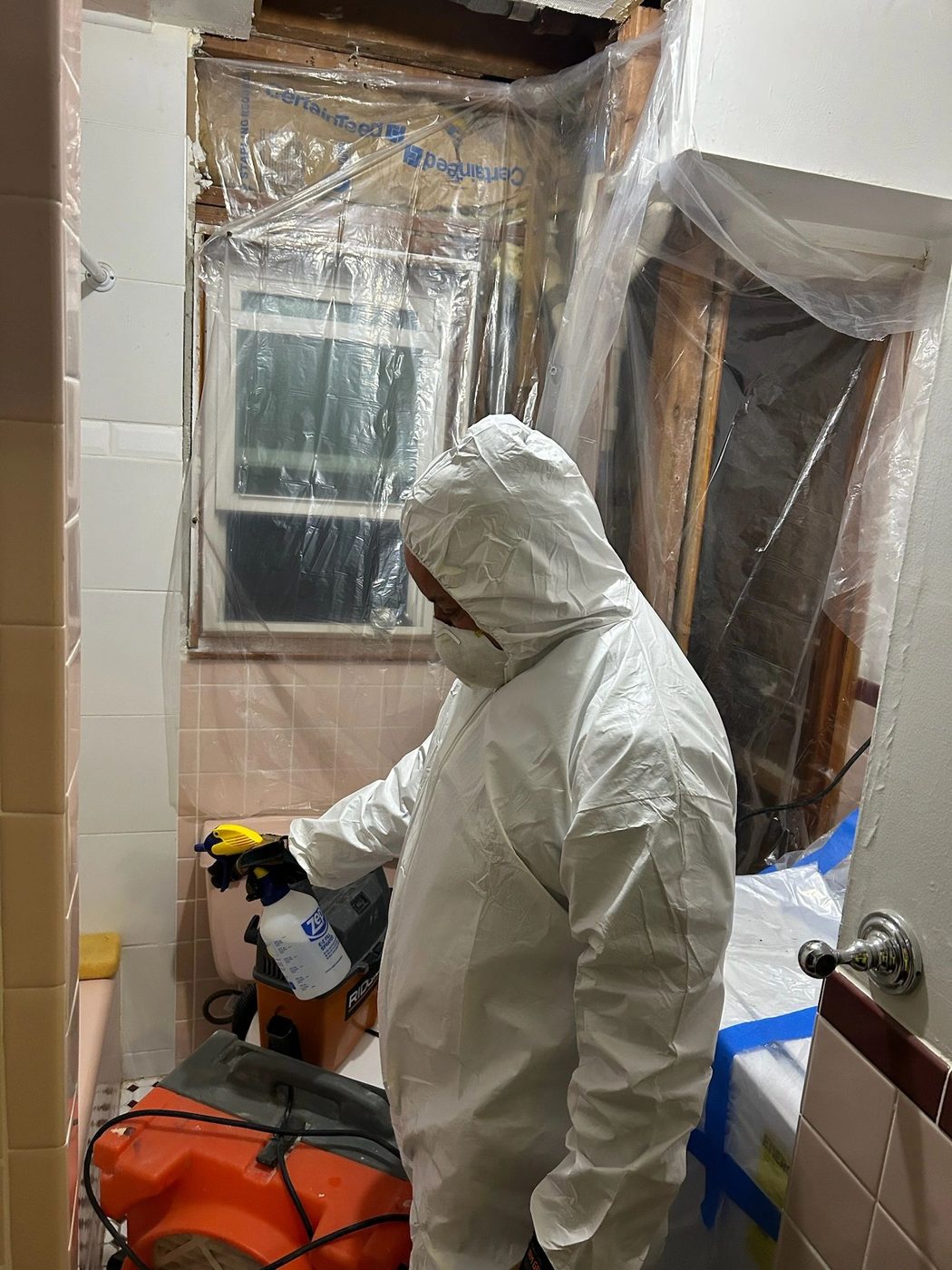
A GlobePro Restoration technician setting up containment and drying in a water-damaged bathroom.
Frequently asked questions
Who pays when a burst pipe damages the apartment below?
It depends on whose pipe failed and what your lease or proprietary lease says. News 12 noted that landlords are generally responsible for damage to the building, while renters insurance may cover a tenant's belongings and temporary living costs if the apartment can't be lived in.
Can I call 311 about a burst pipe?
Yes, after you have tried your landlord, managing agent or super. A 311 complaint about a leak in an apartment goes to HPD. If there is immediate danger, call 911.
Should I run fans to dry it out myself?
Only once you know the water is clean. The EPA says not to use fans until you have determined that the water is clean or sanitary. Water from a supply pipe starts clean; water from a drain or waste line does not.
Does renters insurance cover a burst pipe?
DFS lists water from a plumbing failure, appliance failure, fire sprinklers and other accidental discharges among the causes a renters policy may cover, along with living expenses if you have to stay elsewhere during repairs. Check your own policy's wording.
Does GlobePro Restoration work with my insurance company?
Yes. GlobePro Restoration works with your insurance company to make the process as smooth as possible.
A pipe just burst?
GlobePro Restoration is based in Brooklyn and serves New York City, 24 hours a day. Call (929) 969-2534 or send a request.
More from the blog
- Mold Testing vs. Remediation on Long Island: Why NY Wants Two Firms
- Smoke Damage Insurance Claim in New York: What to Document Before Cleanup
- What Is Water Damage Restoration? Mitigation, Drying and Repairs Explained
- Smoke Damage Cleanup in an NYC Apartment After a Neighbor's Fire
- Does Homeowners Insurance Cover Sewer Backup in New York?