Mold in Your NYC Apartment: Tenant Rights Under Local Law 55
If you have mold in your NYC apartment, your tenant rights start with Local Law 55 of 2018. In a building with three or more apartments, the owner has to inspect for mold at least once a year, remove it, and fix the leak or moisture problem behind it. Tell your landlord first, in writing. If the mold isn't fixed, file a complaint with 311, and HPD can inspect and issue a violation with a deadline that depends on how much mold there is.
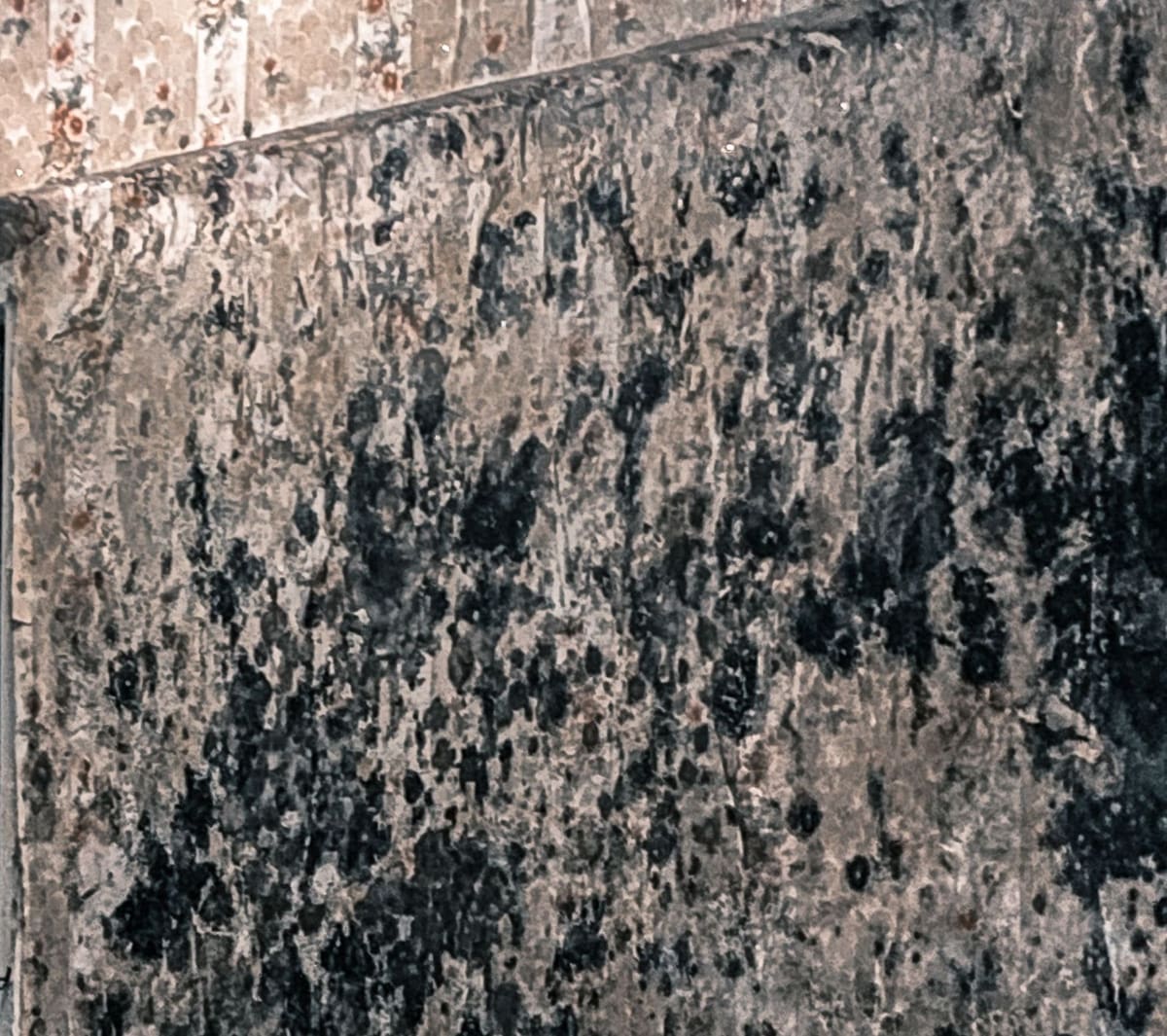
Stock photo: Alexander Popovkin / Pexels.
What Local Law 55 makes your landlord do
Local Law 55 treats mold as an indoor allergen hazard, in the same law as cockroaches, mice and rats. HPD applies it to buildings with three or more apartments. The owner's duties, from the law itself:
- Inspect every year. The owner must check occupied apartments and common areas for mold at least once a year, and more often when a tenant complains or asks for an inspection.
- Fix the cause, not only the stain. The owner must remediate the mold and the "underlying defect." The law's examples are a water leak, water infiltration from plumbing or defective masonry pointing, or another moisture condition.
- Count what furniture hides. Visible mold includes mold behind furniture. Mold on tile or grout is the one exception to the violation rules.
- Tell you at lease signing. Leases must carry a notice of the owner's and the tenant's obligations, and the owner must hand you the Health Department's pamphlet on indoor allergens.
- Clean before you move in. Before a vacant apartment is rented again, the owner must remediate any visible mold and its cause, and certify that in writing to the new tenant.
You have duties too. HPD says tenants should tell the landlord about leaks or signs of mold, and keep the apartment clean and dry.
How HPD classes a mold violation
When an HPD inspector finds mold in an apartment, the total size of the mold in each room sets the class and the deadline to correct it:
- Class A: less than 10 sq ft in a room. 90 days.
- Class B: 10 to 29 sq ft in a room. 30 days.
- Class C: 30 sq ft or more in a room. 21 days.
For scale, the EPA puts 10 square feet at roughly a 3-by-3-foot patch. In hallways and other common areas, 30 square feet or more on one level, or 50 square feet in total, is a Class B.
A violation can also be upgraded. If it isn't certified as corrected on time and the mold is still there when HPD comes back, a Class A can become a Class B, and a Class B a Class C. A false certification of correction can trigger an upgrade too.
How to report mold in your NYC apartment
1. Tell the landlord, super or managing agent in writing. Say which rooms, roughly how big each patch is, and when you first saw it. A dated message is your record that they knew. 2. Photograph it with a tape measure in the frame. HPD classes mold by square feet, so a measured photo is worth more than a close-up. 3. File with 311 if it isn't fixed. HPD says to complain online or call 311 if the landlord doesn't fix the problem, or if the repair isn't done safely. 4. If someone at home has asthma, their doctor can ask the NYC Health Department for a home environmental inspection, at no cost to you, through its online registry. 5. NYCHA residents report mold to NYCHA through the MyNYCHA app, its website or the Customer Contact Center. NYCHA says it does these inspections and repairs free of charge. 6. If violations don't get it done, a tenant can bring an HP action in Housing Court to make the owner do the repairs. HPD says you don't need a lawyer to start one.
If the mold comes back soon after it's cleaned, the NYC Health Department says there may be a leak behind it. Report that to the landlord as well.
Who is allowed to remove the mold
Two things decide who can do the work: how big the patch is, and how big the building is.
When the owner fixes it, Local Law 55 sets the method. Fix the leak or moisture first. Remove furniture or cover it with plastic. Keep dust from spreading, for example by sealing off the area with plastic sheeting. Clean the mold with soap or detergent and water, throw out what can't be cleaned in sealed heavy plastic bags, and leave the area dry and visibly free of mold, dust and debris.
Over 10 square feet. New York State law treats mold work on an area over 10 square feet as a "project." Any contractor doing the assessment or the remediation needs a license from the NYS Department of Labor, and one licensee can't do both on the same property. Routine cleaning, and repairs done for reasons other than mold, don't count as a project. You can check a contractor through the Department of Labor's licensed mold contractor search.
Buildings with 10 or more apartments. Local Law 61 covers these, plus buildings on lots with 25,000 square feet or more of non-residential space. For a mold project, the owner, the managing agent and their employees can't do the work themselves. It has to be done by state-licensed contractors, with the assessor independent of the remediator, and the remediator has to notify the city at least two business days before work starts. HPD says those filings go to the Department of Environmental Protection. NYCHA buildings are excluded from Local Law 61.
The leak comes first
Mold needs water. The EPA says that in most cases mold will not grow if wet or damp items are dried within 24 to 48 hours. It is also why Local Law 55 puts the leak on the owner's list, not only the stain: the EPA says that if you clean up mold but don't fix the water problem, the mold will most likely come back.
In a New York City apartment, the water often starts somewhere you can't reach: a bathroom one floor up (see water leaking from the apartment upstairs), a radiator valve or steam pipe in heat season (see radiator and steam pipe leaks), or a pipe inside the wall.
GlobePro Restoration is a 24/7 restoration company based in Brooklyn. When a leak needs drying, our 24/7 water damage restoration finds every place the water got in and dries out all the affected areas, and we work with your insurance company to make the process as smooth as possible. If you rent, that call usually goes through your landlord or managing agent, because the building is theirs to repair.
Drying is water work. Where mold has already grown over 10 square feet, the state licensing rules above still apply.
Frequently asked questions
Is my landlord responsible for mold in my NYC apartment?
In a building with three or more apartments, yes. Local Law 55 makes the owner responsible for fixing the mold and the leak or moisture behind it. The NYC Health Department adds that owners of buildings of any size must keep homes free of mold where a tenant has been diagnosed with moderate or severe persistent asthma. New York's warranty of habitability, in Real Property Law §235-b, can't be waived in a lease, though it doesn't cover conditions caused by a tenant's own misconduct.
How long does my landlord have to fix mold?
Once HPD issues a violation, 90 days for Class A (under 10 sq ft in a room), 30 days for Class B (10 to 29 sq ft) and 21 days for Class C (30 sq ft or more).
Can I clean a small patch of mold myself?
The NYC Health Department says to clean mold on walls and other hard surfaces with soap or dish detergent and water, wear waterproof gloves, and dry the area completely. Tell your landlord anyway, especially if it comes back.
Do I need a mold test before I complain?
No. HPD classes a violation by the visible area of mold. The NYS Department of Labor says that in most cases, air sampling and mold testing are unnecessary.
Water coming in right now?
GlobePro Restoration answers 24 hours a day, 7 days a week. Call (929) 969-2534 or send a request.
More from the blog
- Mold Testing vs. Remediation on Long Island: Why NY Wants Two Firms
- Smoke Damage Insurance Claim in New York: What to Document Before Cleanup
- What Is Water Damage Restoration? Mitigation, Drying and Repairs Explained
- Smoke Damage Cleanup in an NYC Apartment After a Neighbor's Fire
- Does Homeowners Insurance Cover Sewer Backup in New York?