Steam Pipe Burst or Radiator Leak in Your NYC Apartment: What to Do When the Heat Comes On
A steam pipe burst in an NYC apartment is a burn hazard first and a water problem second. Keep everyone away from the steam, don't grab the valve, and call your super, landlord or managing agent to shut the line or the boiler down. If steam is filling the room or water is reaching wiring, get out and call 911. Then warn the apartment below, photograph the damage, and get the wet plaster dried before mold can start.
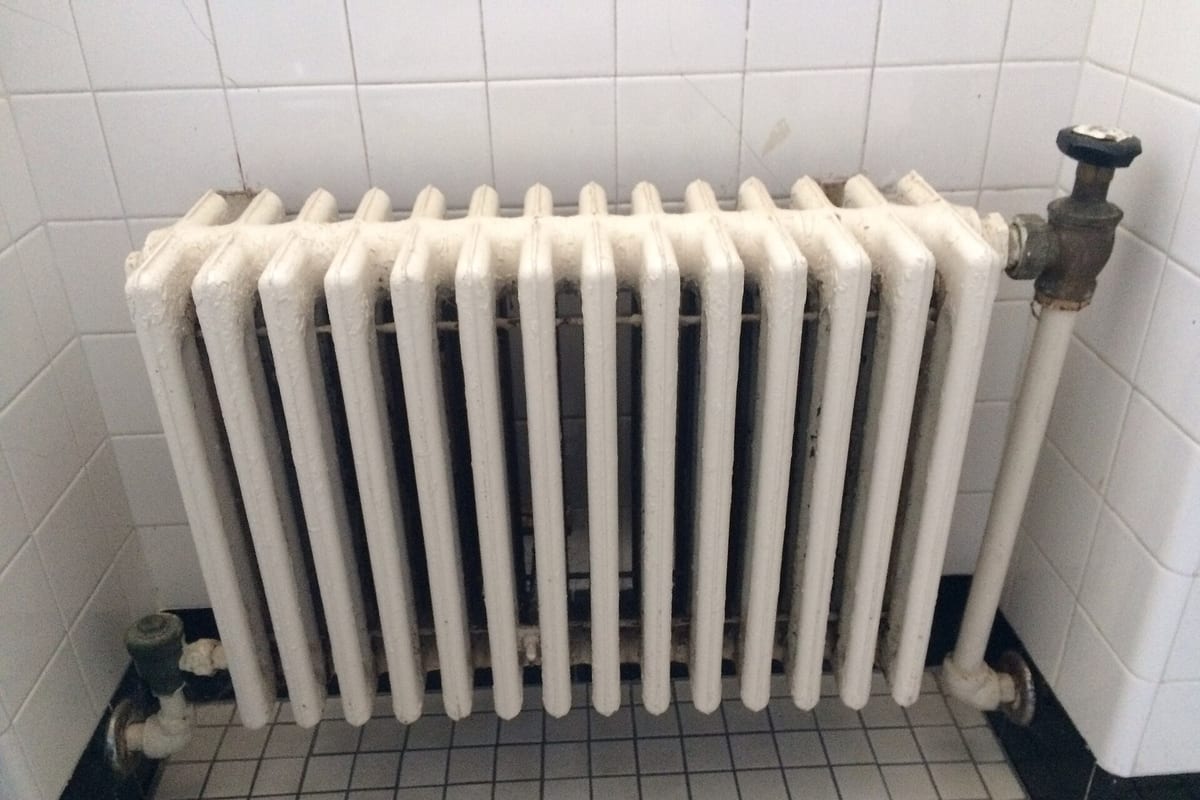
A steam radiator. Photo: sunfishtommy, CC BY-SA 3.0, via Wikimedia Commons.

Why radiators and steam pipes leak when the heat comes on
New York City's heat season runs from October 1 to May 31. During it, HPD says owners must keep apartments at 68°F or warmer between 6 am and 10 pm whenever it is below 55°F outside, and at 62°F or warmer overnight whatever the weather. In an older building with steam heat, that means steam is moving again through radiators, valves and risers that sat idle all summer.
The first cold weeks are when weak points show up. A valve that was dry in May can start to drip, an air vent can spit water, and a corroded fitting can crack. HPD puts the risk plainly: combined with corroded pipes or faulty valves, radiators can rupture without warning.
In November 2025, News 12 Brooklyn reported on a Bed-Stuy NYCHA apartment where a radiator pipe cracked right after the heat was turned on. Steam poured through the living room, soaked the ceiling and damaged a TV. Patches failed within days, and crews replaced the pipe within hours of News 12 contacting NYCHA.
Steam pipe burst in an NYC apartment: what to do first
- Stay clear of the steam. Steam, and the water that comes out of a heating system, can scald. Don't reach into the spray to turn a valve, and keep children and pets out of the room.
- Call 911 if there is immediate danger. That is 311's own advice for leaks, and it applies when steam is filling the apartment, a ceiling is bulging, or water is running near outlets or a light fixture.
- Call the super, landlord or managing agent. They can shut down the line or the boiler. In a co-op, Habitat magazine notes that the super or a porter can usually get water shut off faster than board members can.
- Catch what you can. Towels, a bucket, a baking pan under a dripping valve. Move rugs, electronics and papers out of the way.
- Photograph it. The radiator, the valve or pipe that failed, the wet floor and any stained ceiling, before anything is cleaned up.
If the building doesn't respond, a 311 complaint about a leak in an apartment goes to HPD, which contacts the managing agent and can send an inspector if the condition isn't fixed. HPD also says tenants with a defective radiator may call 311 when an owner doesn't deal with it.
Who fixes a leaking radiator: renters, co-ops and condos
If you rent, keeping the heat working is the landlord's job. The New York Attorney General's tenant guide says landlords of multiple dwellings must keep heating systems, along with plumbing and electrical systems, in good and safe working order.
Radiators now have a rule of their own. Under Local Law 151 of 2025, owners of buildings with three or more apartments and steam heat must have radiators inspected at least once every two years in apartments where a child under six lives, and in common areas. HPD began enforcing it in May 2026. According to HPD's radiator inspection page, a radiator found to be hazardous has to come out of service within 24 hours and be repaired or replaced within 7 days, and other defects must be corrected within 14 days.
If you own a co-op, the radiator inside your apartment is usually yours. A co-op attorney told Habitat magazine in 2021 that a leaking radiator is the shareholder's responsibility "99.9% of the time," with the proprietary lease, usually its Paragraph 18, governing repairs. A neighbor's overflowing or broken fixture is the neighbor's.
If you own a condo, the bylaws decide who repairs what, so ask management before anyone opens a wall.
Insurance is a separate question. The Insurance Information Institute lists accidental discharge of water or steam from a heating system, and the sudden cracking or bulging of a steam heating system, as covered perils in its standard renters (HO-4) and condo and co-op (HO-6) policy forms. Your own policy's wording decides, so ask your insurer.
Protecting the apartment below
Radiator water doesn't stay on your floor. In a walk-up or a prewar elevator building it can soak into the floorboards, run along a pipe where it passes through the floor, and show up as a stain or a drip on the ceiling underneath.
- Knock on the door below, tell your neighbor what happened, then tell management in writing.
- Ask them to check the ceiling under your radiator and along the wall it sits on.
- If their ceiling is bulging or sagging, everyone stays out from under it.
Write down when the leak started and stopped and who you told. It helps the building, both insurers and whoever does the drying.
Drying plaster after a radiator leak
Prewar plaster and the lath behind it can hold a lot of water. A wall or ceiling can feel dry to the touch while the inside is still wet, so painting over a radiator stain can bring the stain right back. Water from an old heating system can also be rusty, which is why these stains are often brown.
The deadline is mold. The EPA says that in most cases mold will not grow if wet or damp items are dried within 24 to 48 hours, and a radiator that leaked overnight has already used part of that window.
GlobePro Restoration finds every place the water got in and dries out all the affected areas, in your apartment and in the one below. Once everything is dry, the repairs begin. For 24/7 water damage restoration, call (929) 969-2534 at any hour, and we work with your insurance company to make the process as smooth as possible. Our guide to water damage restoration in Brooklyn explains how water moves through walk-ups, rowhouses and garden floors.
Frequently asked questions
Who do I call when my radiator is leaking in NYC?
Your super, landlord or managing agent first, or your co-op or condo management. If it isn't fixed, a 311 complaint goes to HPD. Call 911 if steam or water creates immediate danger.
Is a hissing radiator a leak?
Not always. Steam radiators often hiss from the air vent as the heat comes up. Water spitting from the vent, a puddle under the valve, or steam escaping from a pipe joint is worth reporting.
Who pays for a radiator leak in a co-op?
Usually the shareholder, when the radiator is inside the apartment, though the proprietary lease decides. Damage from a neighbor's broken fixture is generally the neighbor's responsibility, according to Habitat magazine.
Does my landlord have to inspect the radiators?
In buildings with three or more apartments and steam heat, Local Law 151 of 2025 requires inspections at least every two years in apartments where a child under six lives, plus common areas. HPD's radiator page has the details.
Does GlobePro Restoration work with my insurance company?
Yes. GlobePro Restoration works with your insurance company to make the process as smooth as possible.
Radiator leaking right now?
GlobePro Restoration is based in Brooklyn and serves New York City 24 hours a day. Call (929) 969-2534 or send a request.
More from the blog
- Water Damage Restoration in Manhattan: Co-ops, Condos and Prewar Walk-Ups
- Water Leak From the Upstairs Apartment in NYC: First Steps and Who Pays
- Flood Cleanup in Brooklyn's Coastal Neighborhoods, 14 Years After Sandy
- Water Damage Restoration in Queens, NY: Basements, Attached Homes and Flash Floods
- Water Damage in Brooklyn Rowhouses, Walk-Ups and Basements