A Backwater Valve in NYC: What It Stops, What It Costs and Who Gets One Free
A backwater valve is a one-way flap on your building's sewer line. When the city sewer backs up and water starts flowing toward your house, the flap swings shut and keeps sewage from coming up through your basement drains. In NYC, DEP says a licensed plumber typically charges $4,000 to $15,000 to install one, a job of 2 to 8 hours, and FloodHelpNY lists a program that installs them free for eligible owners in some neighborhoods. It is not right for every home, and DEP says cheaper fixture plugs may be the better defense for many.
GlobePro Restoration is a 24/7 restoration company based in Brooklyn. We don't install valves; we handle the water after a backup.
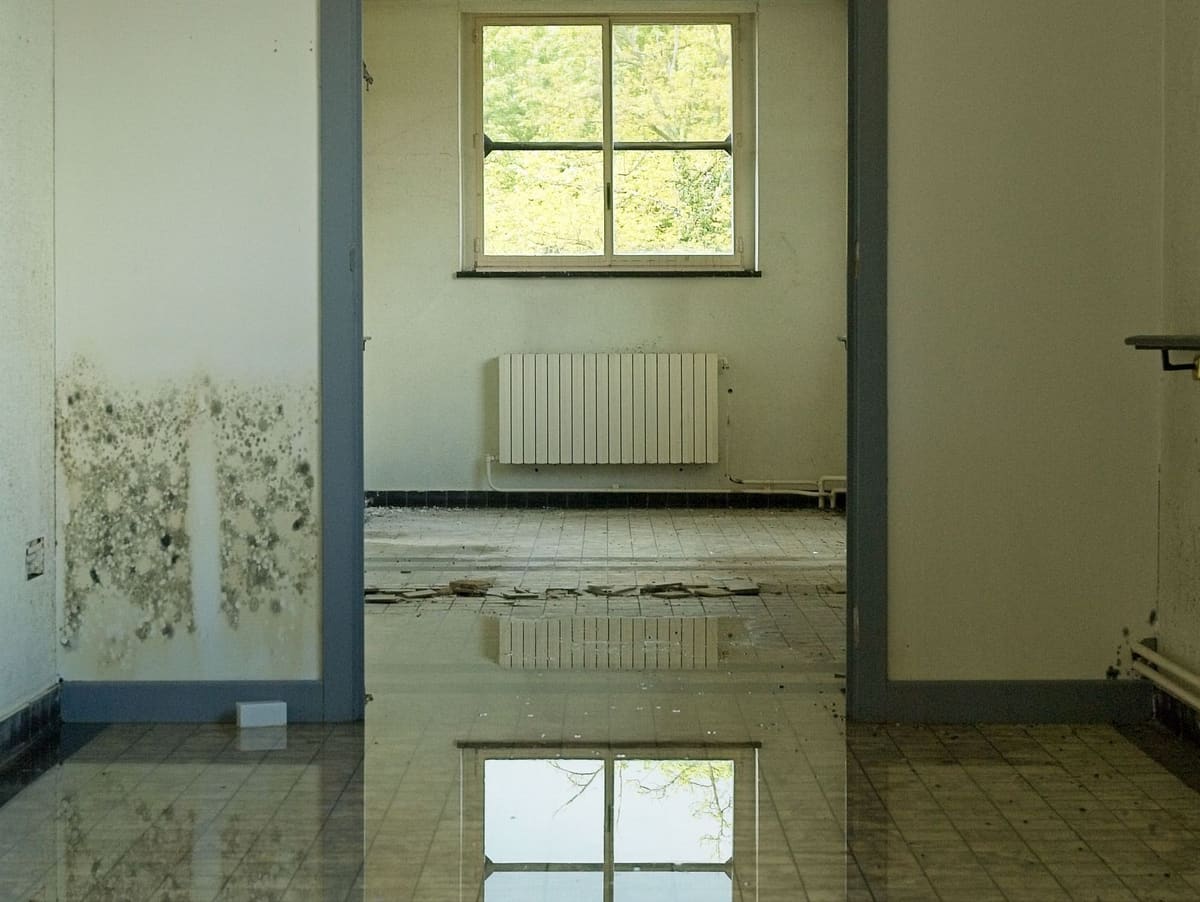
Stock photo: Emmanuel Codden / Pexels.
What a backwater valve stops, and what it doesn't
Most of what follows comes from DEP's December 2024 evaluation of backwater valves, a report required by Local Law 1 of 2023.
In a sewer backup, wastewater that can't move forward through the sewer reverses and comes up into buildings, most often through basement floor drains and other fixtures. A backwater valve sits on the pipe that carries your building's wastewater to the street. If the sewer is overloaded or blocked, the flap closes; when the pressure drops, it opens again and normal flow resumes.
The catch is in the closed position. While the flap is shut, nothing can pass in either direction, so every shower, toilet flush, sink and dishwasher in the house drains into a sealed pipe. DEP warns that if you keep using fixtures while the valve is closed, you will likely flood your basement from your own wastewater. A valve that is misused or poorly maintained causes backups instead of preventing them.
It also only does one thing. DEP says a valve reduces the risk of sewer backups, but not water coming in through doors or windows, or groundwater seeping through cracks in basement walls and foundations. By the city's account, Ida brought both: water through doors and windows, and sewage pushed up through plumbing fixtures.
Does your NYC home need a backwater valve?
DEP's report found valves work best on two kinds of property:
- Homes with drains below street level. When a sewer overloads, the water in it can rise to the top of the manhole. Any drain or fixture lower than that is at risk, and the lower it is, the greater the risk. DEP says a home with a downward-sloping driveway likely has a basement at greater risk, while an elevated home may have its basement fixtures above street level.
- Homes on combined sewers. About 60% of the city's sewer system is combined, carrying sewage and stormwater in one pipe. Areas with separate storm sewers see fewer rain-driven backups.
DEP counts roughly 74,000 properties at risk of backups when rain falls at 1.75 inches an hour, about 59,000 of them one- or two-family homes. About 500 of those homes had filed wet-weather backup complaints in the five years before the report.
Building type matters too. In a multi-family house, every household has to coordinate its water use while the valve is closed, which DEP says makes valves less practical there. And the city's plumbing code already requires them in some places: DEP notes that Section 715.1 of the 2022 Plumbing Code requires backwater valves in buildings in designated flood hazard areas that are at risk of overflow.
Where is the backwater valve located?
On the building's sewer line, between the plumbing fixtures and the city sewer. DEP recommends putting it inside the basement where possible, so it's easier to maintain and so you can check during a storm whether it has closed. It can go outside, depending on the pipe's slope and elevation. Either way, it gets a cap or cover so it can be inspected and cleaned later.
The plumber decides the exact spot after inspecting the line, and FloodHelpNY warns that a valve in the wrong place can make things worse.
How much does a backwater valve cost in NYC?
DEP's figure is $4,000 to $15,000 for a licensed plumber, with 2 to 8 hours of work depending on how easy the sewer connection is to reach. FloodHelpNY quotes a wider range, from as little as $600 to more than $5,000, depending on the pipe layout, how deep it runs, hazards such as lead paint, and the type of valve. Get more than one quote.
DEP describes the job as five parts:
- digging out the area where the valve will go;
- flushing and cleaning the sewer line;
- installing the valve;
- adding a cap or cover for future inspection and maintenance;
- disconnecting and moving any gutter downspout that drains into the sewer.
That last step is not optional. DEP says a downspout still tied to the sewer will have nowhere to drain once the valve closes, and it will back up into the house.
Permits are part of it too. For a valve inside the house, the licensed plumber files a Department of Buildings permit. For one outside on the property, the plumber files a DEP permit. DEP suggests checking the plumber's license on the Department of Buildings website.
On insurance, FloodHelpNY says a backwater valve has no effect on flood insurance premiums. Some homeowners insurers may offer a discount; ask yours.
Who gets a free backwater valve in NYC
FloodHelpNY, run by the Center for NYC Neighborhoods, describes its Residential Backwater Valve Installation Program as completely free. The areas it names are Lower Manhattan, Rockaway East, the Southeast Brooklyn Waterfront, Gravesend and Bensonhurst, Howard Beach, Gerritsen Beach and Sheepshead Bay, and the Southern Brooklyn Peninsula. The rules:
- Building owners only, and the home must be a primary residence; the site's FAQs add that it must have been your primary residence during Hurricane Sandy. Renters can't apply but can share the program with their landlord.
- Low- to moderate-income households, at or below 80% of area median income, at this time.
- Homeowners insurance is required, and flood insurance too if the property is in an AE zone.
- Owners with tenants complete an income form for each unit.
- In Canarsie and Red Hook, the program is limited for now to owners who went through FloodHelpNY's Home Resiliency Audit.
The program covers an engineer's review of whether a valve would help, installation by a licensed plumber who also restores the work area, a closing walk-through with an inspector, and a technical report with photos and maintenance instructions. Whether new applications are being accepted isn't clear from the site, so look up your address there.
DEP, for its part, applied for FEMA hazard mitigation funding for a pilot that would reimburse about 124 high-risk one- and two-family homes in five Brooklyn neighborhoods for hiring a contractor to install a valve. As of its December 2024 report, that depended on the grant being awarded.
The cheaper option: fixture plugs
DEP's report calls temporary fixture plugs "a simpler, cost-effective alternative" for many homes. You put them into basement floor drains, showers, tubs, sinks, washing machine drains and toilets when heavy rain is forecast.
- Twist expansion plugs go into the drain and tighten with a wing nut. DEP lists them at about $3 to $18, depending on size.
- Inflatable plugs (test balls, including toilet-specific "bungs") inflate inside the pipe. DEP lists them at about $40 to $140.
They need no installation or maintenance and don't block the use of your other fixtures, but someone has to put them in before the storm. Measure each drain's diameter before you buy, and ask a plumber which plug suits which fixture.
Living with a backwater valve
DEP's maintenance advice for owners:
- Inspect the valve every three months after it's installed, and inspect and clean it at least once a year, or have a contractor do it.
- Never take it apart during or right after heavy rain or snowmelt, because while it's open you have no backflow protection.
- Make sure no one uses the plumbing while you service it, and ventilate: sewer gas may be present.
- During a storm, if the valve closes, keep water use to a minimum until it reopens.
- If you sell the house, tell the buyer. Maintenance becomes theirs.
If sewage already came up
Report it to 311, and DEP says it will send someone to inspect within six hours of the complaint, though heavy rain or snowmelt can delay that. Sewage is one of the IICRC S500 standard's examples of Category 3, grossly contaminated water, so it is cleaned and disinfected before any drying. Our guide to sewage cleanup in NYC covers the 90-day claim deadline, and how to dry out a flooded basement covers the drying.
GlobePro Restoration finds every place the water got in and dries out all the affected areas, and we work with your insurance company to make the process as smooth as possible. For 24/7 water damage restoration, call (929) 969-2534.
Frequently asked questions
How much does a backwater valve cost in NYC?
DEP says a licensed plumber typically charges $4,000 to $15,000 and takes 2 to 8 hours. FloodHelpNY gives a range of about $600 to more than $5,000, depending on the pipe and the valve.
Where is the backwater valve located?
On the sewer line between your fixtures and the city sewer, under a cap or access cover so it can be checked. DEP recommends inside the basement where possible, so you can maintain it and see whether it has closed.
Is there a free backwater valve program in NYC?
FloodHelpNY lists one for eligible low- to moderate-income building owners in named neighborhoods in Lower Manhattan, Queens and southern Brooklyn. Renters can't apply. Check the site for your address and whether applications are open.
Can I use my toilet when the backwater valve is closed?
Keep it to a minimum. While the valve is closed, wastewater from inside the house has nowhere to go, and DEP warns it can flood your basement.
Will a backwater valve lower my flood insurance?
FloodHelpNY says backwater valves have no effect on flood insurance premiums. Some homeowners insurers may give a discount, so ask.
Sewer water in your basement now?
Call GlobePro Restoration at (929) 969-2534, 24 hours a day, or send a request. We serve New York City and the surrounding areas.
More from the blog
- Mold Testing vs. Remediation on Long Island: Why NY Wants Two Firms
- Smoke Damage Insurance Claim in New York: What to Document Before Cleanup
- What Is Water Damage Restoration? Mitigation, Drying and Repairs Explained
- Smoke Damage Cleanup in an NYC Apartment After a Neighbor's Fire
- Does Homeowners Insurance Cover Sewer Backup in New York?