Water Heater Leaking? What to Do First, and How to Dry Out the Damage
A water heater leaking is a two-valve job first and a drying job second. Close the cold-water supply valve on the pipe feeding the tank, then cut the energy: the breaker for an electric heater, the control knob for a gas one (if you smell gas, leave instead). Then find where the water is coming from: a drip at the top fittings, a weeping drain valve and a rusted-through tank are three different problems, and only the last always means a new heater. The heater is a plumber's job. The wet floor, the closet wall and the ceiling below are a drying job, and that clock starts with the first puddle.
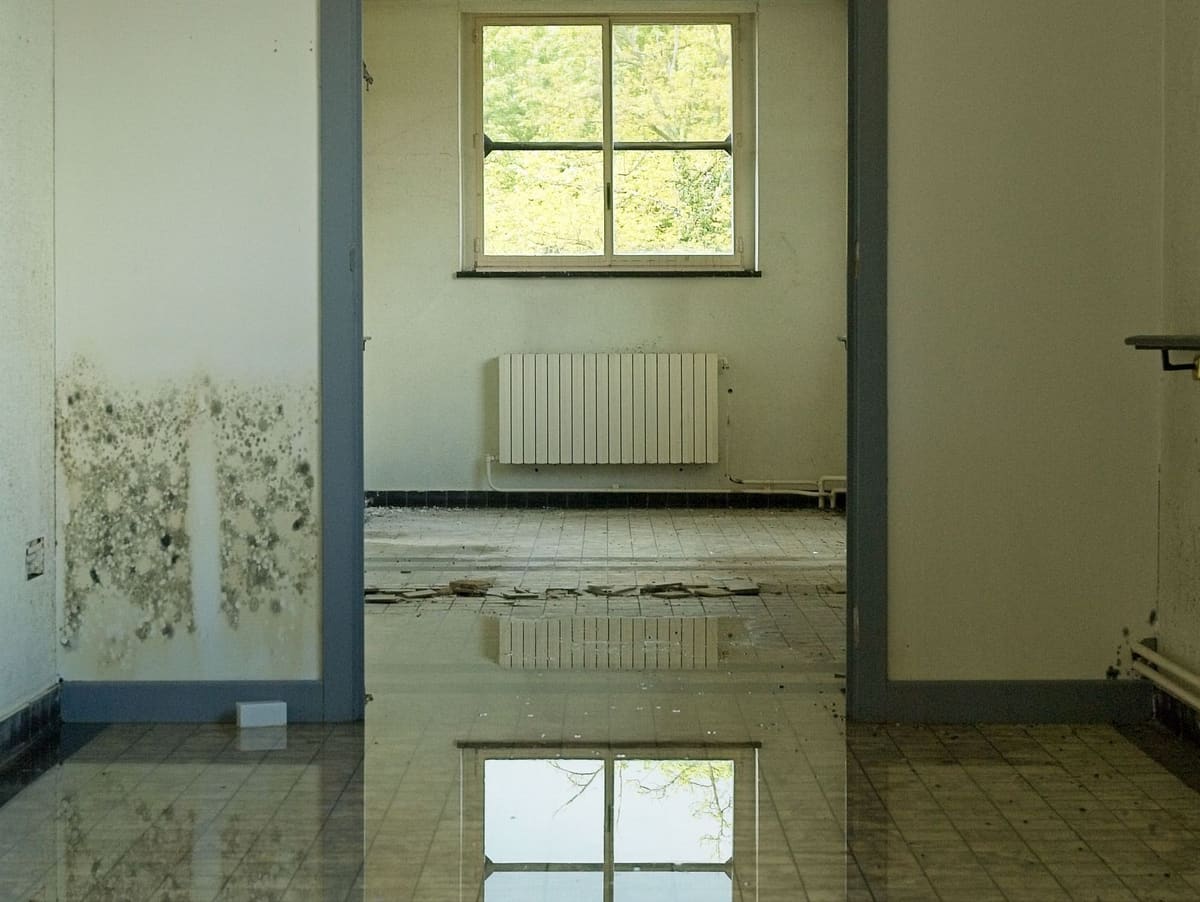
Stock photo: Emmanuel Codden / Pexels.
Water heater leaking: shut it down safely first
Skip any step that would put you in standing water near wiring.
- If you smell gas, skip the rest and leave. Con Edison's gas leak guidance is to leave the area immediately and call 911 once you're safe, without lighting matches, starting a car, or using phones, flashlights or other electronics that could spark. It gives National Grid customers the same 911 instruction.
- Close the cold-water supply. Most tank heaters have a shutoff on the cold pipe going into the top. A round handle closes clockwise; a lever is closed when it sits across the pipe. If you can't find it, close the main shutoff.
- Turn off the heat source. Switch off the breaker for an electric heater, or turn the control on the front of a gas heater to off.
- Let it cool. Water from inside the tank, or from its drain valve, can be hot enough to scald.
- Photograph it. The heater's label with the brand and model, the water on the floor, and the bottoms of the walls around it.
Where is it leaking from? Top, drain valve or bottom
Wipe the tank dry and watch where fresh water appears.
Water heater leaking from the top
The top of a tank heater has the cold inlet and hot outlet connections and, on most models, the temperature and pressure relief valve (the T&P valve), with a pipe running down the side toward the floor. A drip at a pipe connection is often a loose or corroded fitting, which a plumber can usually reseal or replace.
A. O. Smith, a water heater manufacturer, describes the T&P valve in a technical bulletin as a safety device that limits temperature and pressure in the tank. Occasional weeping or dribbling, the bulletin says, is the valve relieving pressure, and a closed plumbing system can push that pressure up through thermal expansion. A large, sudden discharge of very hot water points to a malfunctioning thermostat. Never cap, plug or remove the valve or its pipe to stop a drip. Call the plumber.
Water heater leaking from the drain valve
Near the bottom of the tank is the drain valve, a small spigot used to empty or flush it. A drip from the spout usually means it isn't fully closed or its washer has worn. A threaded hose cap can hold a slow drip until the plumber replaces the valve. Water seeping around the base of the valve, where it threads into the tank, is a call-now problem.
Water heater leaking from the bottom of the tank
Water pooling under the tank, with nothing dripping from above, often means the tank itself has corroded through. A tank can't be patched; the heater has to be replaced. First check that the water isn't running down from a top fitting or out of the relief valve's pipe, which ends near the floor and can make a top leak look like a bottom one.
Age is the other clue. A 2011 consumer pamphlet from Connecticut's Insurance Department, drawing on an Institute for Business & Home Safety study, said the chance that a water heater leaks or bursts begins to rise sharply once it is five years old, and that three-quarters of water heaters fail before they reach 12.
Who fixes the heater in a New York City building
- A house, brownstone or two-family you own. You hire the plumber. When a licensed master plumber replaces a hot water heater in a building with one to five families, a Department of Buildings notice from April 2026 says they file form OP128: HHW with the Department and submit an affidavit confirming the chimney is in good working order.
- A rental apartment. In many city apartment buildings, hot water comes from equipment in the basement rather than a tank in each unit. Either way, HPD says building owners are legally required to provide hot water 365 days a year at a constant minimum of 120°F. If a leak leaves you without hot water, contact your landlord first, and file a complaint through 311 if the landlord doesn't respond.
- A co-op or condo unit with its own heater. Your proprietary lease or bylaws usually decide who repairs it and who pays for water that reached a neighbor. Ask management first.
Drying out after a water heater leak
When a tank heater gives out, it usually empties onto a floor nobody watches: a cellar slab in a rowhouse, the bottom of a hall closet, the corner behind a laundry machine.
That water starts out clean, since it came from the supply line, but it doesn't always stay that way. The IICRC's S500 standard says a water's category reflects its quality after it touches the materials on site, not only its source, and that time and temperature can change it.
The deadline is mold. The EPA's mold guidance says that in most cases mold will not grow if wet or damp items are dried within 24 to 48 hours. The same guidance covers the materials a heater leak usually reaches:
- Carpet. A wet vacuum alone won't dry it. Carpet and pad have to be pulled up off the floor to dry.
- Concrete and block. Water can be pulled off with a water-extraction vacuum, and dehumidifiers, fans and heaters speed up the drying.
- Walls. The cavity inside a wall is the hardest area to dry. Our guide on whether wet drywall needs to be replaced covers when the bottom of the wall has to come out.
If the heater is on an upper floor, the water also goes down, so tell the neighbor below and building management right away. A heater that has been weeping for weeks may have soaked the subfloor long before anyone saw a puddle; the signs of hidden water damage show where to look.
GlobePro Restoration handles the water, not the heater. We find every place the water got in and dry out all the affected areas, and we work with your insurance company to make the process as smooth as possible. For 24/7 water damage restoration, call (929) 969-2534 at any hour.
New York's Department of Financial Services says to notify your insurer first after a loss, protect the property from further damage, and make no permanent repairs until the insurer has inspected, since it can refuse to pay for damage repaired before then. Ask whether the adjuster wants to see the old heater before it's hauled away.
Frequently asked questions
Is a leaking water heater an emergency?
A steady leak, or any water near wiring or a gas line, is: shut off the water and the power or gas now. A slow drip from a fitting is less urgent, but the wet floor and wall still need to dry within the 24-to-48-hour window the EPA describes.
Can a leaking water heater be repaired?
Often, when the leak is at a pipe fitting, the drain valve or the relief valve. When the tank itself is leaking, the heater has to be replaced.
Does homeowners insurance cover water heater leak damage?
It depends on the policy. DFS describes homeowners insurance as coverage bought for "sudden and unexpected large losses," so call your insurer, describe what happened and ask, rather than assuming either way.
Does GlobePro Restoration repair water heaters?
No. GlobePro Restoration dries out the water damage; a plumber repairs or replaces the heater.
Water on the floor around your heater?
Call (929) 969-2534, day or night, or send a request. GlobePro Restoration is a 24/7 restoration company based in Brooklyn, working across New York City.
More from the blog
- Water Damage Restoration in Manhattan: Co-ops, Condos and Prewar Walk-Ups
- Water Leak From the Upstairs Apartment in NYC: First Steps and Who Pays
- Flood Cleanup in Brooklyn's Coastal Neighborhoods, 14 Years After Sandy
- Water Damage Restoration in Queens, NY: Basements, Attached Homes and Flash Floods
- Steam Pipe Burst or Radiator Leak in Your NYC Apartment: What to Do When the Heat Comes On