Does Wet Drywall Need to Be Replaced? How to Tell, Wall by Wall
Does wet drywall need to be replaced? Not always. The EPA says drywall may be dried in place if there is no obvious swelling and the seams are intact, and that otherwise it has to come out. In practice, drywall wet with clean water and dried quickly can often stay, while drywall that is swollen, sagging, crumbling, moldy, soaked by sewage or floodwater, or hiding wet insulation usually comes out.
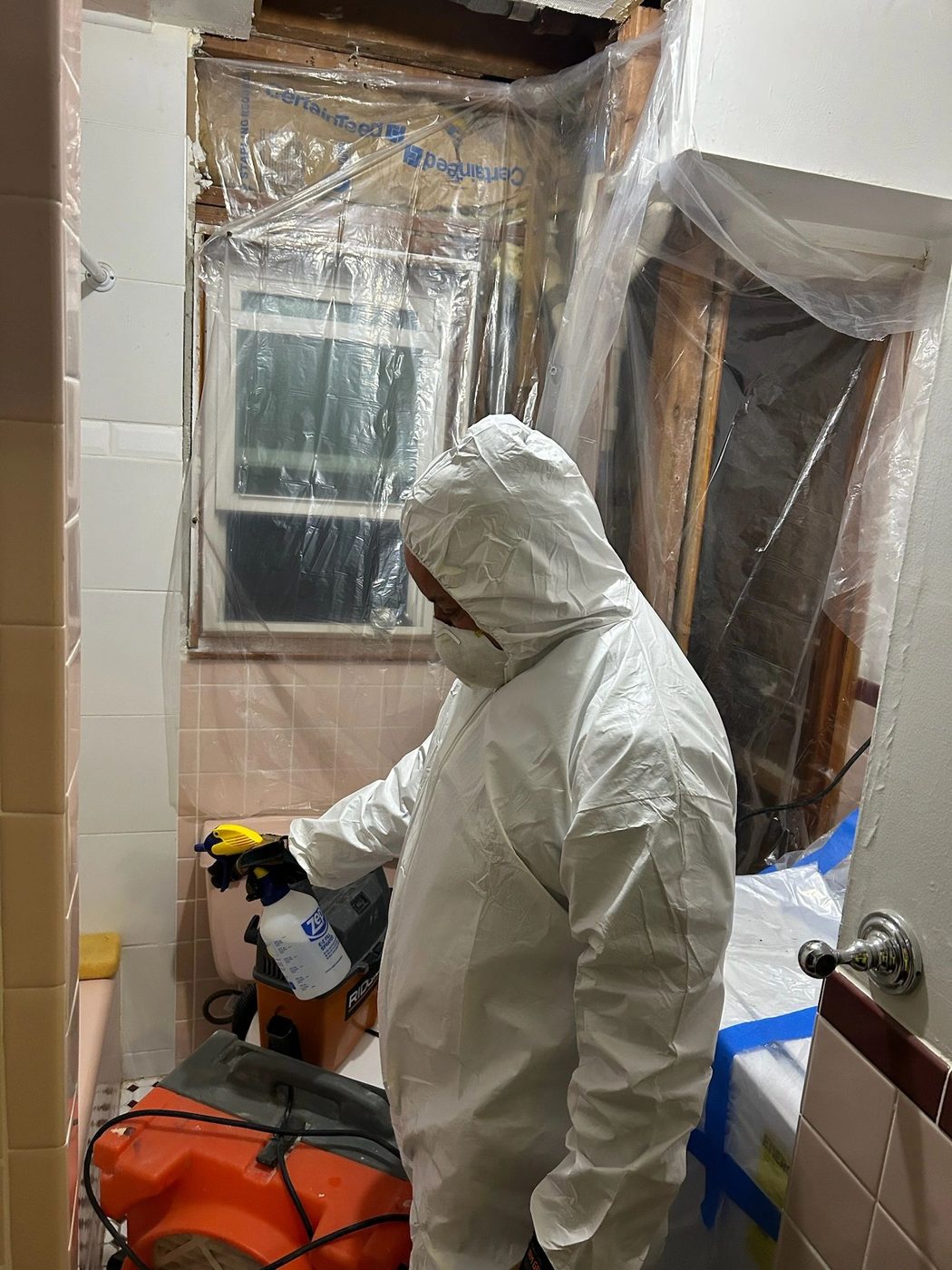
A GlobePro Restoration technician setting up containment and drying in a water-damaged bathroom.
When wet drywall can be dried in place
Drywall is gypsum pressed between two layers of heavy paper. It soaks up water fast, but a single wetting doesn't always ruin it. The EPA's water-damage table gives two conditions for leaving it: no obvious swelling, and seams that are still intact. That table is written for clean water, the kind that comes from a supply line, which the industry calls Category 1.
Speed is the third condition. The EPA's rule of thumb is that mold, in most cases, won't grow on wet or damp materials dried within 24 to 48 hours. A wall that got wet this morning is a very different case from one that has been wet since last week.
The fourth is the space behind the board. The EPA calls the wall cavity the most difficult area to dry and says it should be ventilated if drywall is left to dry in place. The room side of the board can dry while its back face, the studs and the bottom plate stay damp.
Two more things are worth knowing before you decide a wall is fine:
- Drywall can wick water upward. The wet area is often taller and wider than the stain.
- Touch is not a test. A wall can feel dry to your hand while the middle of the board is still wet.
If you aren't sure how far the water went, our guide to signs of hidden water damage covers what to look for.
When wet drywall needs to be replaced
These are the signs that a section usually has to come out:
- It swelled, went soft or the seams opened. That is the EPA's own line between drying and removal.
- It sags or crumbles. A bulging wall or ceiling can be holding water. Stay out from under it.
- The water was dirty. Under the IICRC's S500 standard, examples of Category 3, grossly contaminated water can include sewage, waste-line backflow from beyond the trap, seawater and rising water from rivers or streams, and when water is contaminated, cleaning comes before drying. The EPA's flood cleanup guidance says to throw away materials that soak up a lot of water and can't be cleaned and dried. Drywall soaks up a lot of water.
- There is wet insulation behind it. For wet cellulose or fiberglass insulation, the EPA's table says discard and replace. Insulation holds water against the back of the board, so a dry-looking wall can stay wet inside.
- It stayed wet too long, or mold has appeared. The EPA's table sends anything wet for more than 48 hours, or with mold growing on it, to its mold guidelines. It also notes that mold won't always grow after 48 hours, so time alone doesn't decide it.
Usually only the damaged section comes out, not the whole wall. Where the cut goes depends on how high the water wicked.
A water damaged drywall ceiling is a different risk
Ceilings fail differently from walls, because water sits on top of the board instead of running down it. In apartment buildings, the ceiling under a bathroom or kitchen is often the first place a leak from upstairs shows up, as a stain, a bubble in the paint or a sag in the middle of a room.
A sagging ceiling is a safety problem before it is a repair question. Wet gypsum is heavy and weak, so keep people and pets out from under it, stay away from wet light fixtures, and tell your super, landlord or managing agent so the source upstairs gets stopped.
The same EPA test applies once the water is out: if the board swelled or the seams opened, it comes down. Acoustic ceiling tiles, the kind in drop ceilings in basements and offices, are simpler. The EPA's table says wet ceiling tiles should be discarded and replaced.
Plaster in prewar NYC buildings behaves differently
Much of New York City's older housing has plaster walls, not drywall. In a brownstone or a prewar walk-up, the plaster is often troweled over wood or metal lath, or over gypsum board lath. The National Park Service's guide to historic plaster says gypsum board lath was used almost exclusively in residential plastering by the late 1930s.
Plaster holds onto its lath with "keys," the bits of plaster pushed through the gaps that harden behind it. The Park Service says moisture is one of the things that can break those keys, and that plaster which loses them becomes loose or bowed, and on a ceiling can eventually fall. It also notes that gypsum plaster is more vulnerable to water than older lime plaster.
That changes the decision. A wet plaster wall isn't automatically cut out the way swollen drywall is. It can often be dried and then checked for sections that have come loose, and the Park Service describes reattaching loose ceiling plaster when the area around it is still sound. Plaster is thick, so it can take longer to dry than drywall and can feel dry well before it is.
Older walls also carry another risk. HPD says lead is often found in paint in New York City apartments and residential buildings built before 1960, and that damaged, wet or scraped old paint turns into dust or chips. The EPA notes that older buildings may also contain asbestos. Before anyone cuts, scrapes or sands a wet wall in an older building, ask the owner or managing agent what is in it.
Taking out wet material is part of drying
GlobePro Restoration's work on a wet wall is to locate everywhere the water reached and dry all of it. When a section of drywall, wet insulation or a ceiling panel can't be dried where it is, taking it out is how the cavity behind it gets dry. That is part of the drying, not the rebuild. The repairs come after everything is dry, and new board, tape and paint belong to that later stage.
If a wall or ceiling is wet now, our 24/7 water damage restoration serves New York City from our base in Brooklyn. GlobePro Restoration also works with your insurance company, so the claim side runs as smoothly as it can.
Photograph any wet material before it comes out. New York's Department of Financial Services recommends photos or video of the full extent of the damage before cleanup starts, only the repairs needed to stop more damage, and permanent repairs held until your insurer has inspected. If the water also reached the floor, our guide to water damaged hardwood floors covers what happens under the boards.
Frequently asked questions
Can wet drywall dry out on its own?
Sometimes, if the water was clean, the board didn't swell, the seams held and the cavity behind it can dry. The EPA says the wall cavity should be ventilated if drywall is left to dry in place.
Is drywall ruined after it has been wet for 24 hours?
Not automatically. Drywall dried within 24 to 48 hours, with no swelling and intact seams, can often stay. The longer it stays wet, the more likely it has to come out.
Should I paint over a water stain on drywall?
Not until the leak is fixed and the board is dry inside. Paint over a wet wall hides the problem without drying it.
Does a water damaged drywall ceiling always have to come down?
No. It gets the same test as a wall once the water is out: swelling, open seams, sagging and what kind of water it was. A sagging ceiling is a safety issue first, so stay out from under it.
Can GlobePro Restoration work with my insurance on a wet wall?
Yes. GlobePro Restoration works with your insurance company to make the process smoother. Take your photos before anything is cut out.
Wet wall or ceiling right now?
Call (929) 969-2534 any time, 24/7, or send a request and describe the wall or ceiling. The full list of what we do is on our services page.
More from the blog
- Water Damage Restoration in Manhattan: Co-ops, Condos and Prewar Walk-Ups
- Water Leak From the Upstairs Apartment in NYC: First Steps and Who Pays
- Flood Cleanup in Brooklyn's Coastal Neighborhoods, 14 Years After Sandy
- Water Damage Restoration in Queens, NY: Basements, Attached Homes and Flash Floods
- Steam Pipe Burst or Radiator Leak in Your NYC Apartment: What to Do When the Heat Comes On