Signs of Hidden Water Damage in Walls, Ceilings and Floors
The signs of hidden water damage are small before they're obvious: a ceiling stain that keeps growing, paint that bubbles, a floor that goes soft or lifts at the seams, a musty smell with no visible source, or a water meter that moves when every tap is off. In a New York City building, the water often starts somewhere you can't see, such as the apartment above, a pipe inside the wall or the valve on a radiator, so the sign can show up a room or a floor away from the leak.
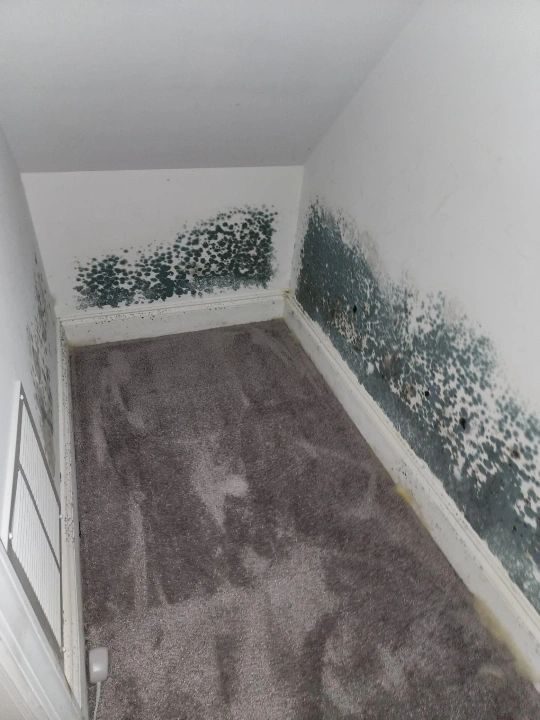
Mold along the lower walls of a closet room.
Signs of hidden water damage on walls and ceilings
Walls and ceilings often show water first: paint and plaster stain, blister or soften before anything drips.
- Stains that grow. Yellow or brown patches, often with a darker ring at the edge. A stain that spreads after rain usually points to the roof, a parapet or an exterior wall. One that spreads after someone upstairs showers usually points to their bathroom.
- Bubbling or peeling paint. Blisters, cracked paint and wallpaper lifting at the seams can all mean water is trapped behind the surface.
- Soft or swollen materials. Drywall that gives when you press it, baseboards that have swelled or pulled away, or a crumbly patch at the bottom of a wall.
- Plaster that looks fine. In older buildings, plaster can feel dry on the surface and still be wet inside, so a dry touch doesn't clear it.
- Condensation and rust. The EPA's guide to mold and moisture says condensation on windows, walls or pipes can be a sign of high humidity and should be dried quickly, and it points to rust on a drainpipe as a sign that condensation is forming on it.
- A sagging ceiling. That's no longer hidden. Stay out from under it and away from any light fixture in it.
Signs of a hidden water leak in floors
Floors can hold water out of sight for a long time, and the damage often shows at the edges first.
- Wood that cups or lifts. Boards with raised edges, new gaps, or a dark patch near a kitchen, bathroom or radiator. Our guide to water-damaged hardwood floors goes into what can be saved.
- Tile and grout. Loose tiles, cracked grout, or a soft spot around the base of the toilet or the edge of the tub.
- Vinyl and laminate. Bubbles in sheet vinyl, or laminate swelling along the seams.
- Carpet. Damp at the edge of the room, or a smell when you press it down.
- A warm spot. A floor that feels warm in one place over hot-water lines can mean a hot-water pipe is leaking underneath.
Smells and sounds that point to hidden moisture
Some signs of moisture damage you notice before you see anything. The EPA says you may suspect hidden mold if a building smells moldy but you cannot see the source. A musty closet, a sour smell under the sink or an odor that gets stronger on humid days often means something nearby is staying wet. Our guide to what causes a water damage smell covers where odors usually start.
Listen too. Running, dripping or hissing inside a wall or ceiling when nothing in the home is on is worth tracking down. So is a toilet that refills on its own: DEP suggests opening the tank and listening for water movement or a hissing sound.
Check your water meter and DEP account
This check can catch a leak nobody can see or hear, and New York City's Department of Environmental Protection spelled it out in a March 16, 2026 release.
- Read the meter with everything off. DEP says water meters are installed inside the property, and that if no water is being used but the meter dials are moving, there may be a leak.
- Use My DEP Account. Customers can sign up for leak notifications, which DEP sends when water use suddenly spikes. DEP adds that consistent overnight usage in the account may indicate a running toilet. In 2025, DEP issued 47,787 leak alerts, and it notes that most people only discover leaks when a high bill arrives.
- Test each toilet. DEP's toilet leak test is to put a teaspoon of food coloring in the tank, wait 10 to 15 minutes without flushing, and look in the bowl. Color in the bowl means the tank is leaking.
- If you find a leak, DEP says property owners may qualify for its Leak Forgiveness Program.
Anyone can do the toilet test, but the meter and account checks are mostly for homeowners. In most apartment buildings one meter serves the whole building, so a tenant's best tools are the signs above and a call to the super.
Where hidden water usually comes from in NYC buildings
- The apartment above. Kitchens and bathrooms in walk-ups and larger buildings are often stacked on the same pipes, so an overflowing tub or a failed seal two floors up can show up on your ceiling. Go to the landlord, managing agent or super first, or to management or the board in a co-op or condo. If they don't act, 311 sends a complaint about an apartment leak to HPD, which contacts the managing agent and can send an inspector. Call 911 if there is immediate danger.
- Pipes inside the walls. The EPA lists leaking or condensing water pipes, especially pipes inside wall cavities or pipe chases, among common moisture problems, and says the insides of walls where pipes run are common sites of mold growth.
- Radiators and steam lines. Heat season runs October 1 to May 31, according to HPD, and a weeping radiator valve can wet the floor below it a little at a time. In a co-op, Habitat magazine reported in 2021 that a leaking radiator is the shareholder's responsibility "99.9% of the time."
- Roofs, parapets and windows. Top-floor apartments and rowhouses get the weather first. In an Institute for Business & Home Safety study summarized in a 2011 Connecticut Insurance Department pamphlet, roof leaks were the most frequent source of water damage.
- Appliances. Water heaters, washing machines, dishwashers and refrigerator ice-maker lines can leak slowly behind or under where they sit.
How moisture readings confirm hidden water damage
Signs tell you where to look. Measurements tell you how far the water went. The IICRC's S500 standard says that during the initial response the restorer should verify the source of the water, identify the extent of the water migration, and set dry standards and drying goals.
In practice, that usually means:
- Moisture meters. Pin meters read moisture in the material between two probes, and pinless meters scan beneath the surface. Readings are compared with a dry area of the same material, so a wet spot stands out.
- Thermal imaging. A thermal camera shows temperature differences that can point to damp areas, but it doesn't measure moisture by itself, so meter readings follow it.
- Following the water. Water moves along joists, down inside walls and across floors, so the wet area is often bigger than the stain.
The EPA's mold guidance says the cavity inside a wall is the hardest area to dry, and that in most cases mold will not grow if wet or damp items are dried within 24 to 48 hours. If you suspect mold behind a surface, don't start pulling it apart: the EPA warns that removing wallpaper with mold growing under it can release a massive amount of spores.
GlobePro Restoration finds every place the water got in and dries out all the affected areas, including the ones you can't see from the room. We work with your insurance company to make the process as smooth as possible. If you've found signs like these, our 24/7 water damage restoration answers at (929) 969-2534.
What to do when you find a sign
1. Photograph it and note the date, so you can tell whether a stain is growing. 2. Report it if you rent. The EPA's advice for renters is to report plumbing leaks and moisture problems to the building owner, manager or super immediately. Use 311 if nothing happens. 3. Find and stop the source if you own the place: a plumber for pipes and fixtures, a roofer for the roof. 4. Tell your insurer before permanent repairs. New York's Department of Financial Services says to notify your insurance company first after a loss. 5. Get it dry quickly. The EPA's 24-to-48-hour window runs from when things got wet, so with hidden water it has often already passed.
Frequently asked questions
How can I tell if there's water damage behind a wall?
Look for stains, bubbling paint, swollen baseboards or soft drywall, and notice any musty smell. A moisture meter reading compared with a dry wall nearby can confirm it without opening anything.
Can my water meter show a hidden leak?
Yes. DEP says that if no water is being used on the property but the meter dials are moving, there may be a leak. My DEP Account can also alert you when usage suddenly spikes.
Does insurance cover hidden water damage?
It depends on the policy and the cause. DFS says a homeowners policy is purchased to cover sudden and unexpected large losses, so damage from a leak that ran for months may be treated differently. Ask your insurer.
Who pays when the hidden leak comes from the apartment above?
It depends on what failed and on your lease or proprietary lease. Report it to your landlord, super or management first, then call your insurer.
What if I find mold behind the wall?
In New York State, mold assessment or remediation of an area over 10 square feet needs a Department of Labor license, and one licensee may not do both the assessment and the remediation on the same project. Fix the water first, or the mold can come back.
Found a stain that keeps growing?
Call (929) 969-2534, 24 hours a day, or send a request. GlobePro Restoration is a 24/7 restoration company based in Brooklyn, serving New York City.
More from the blog
- Water Damage Restoration in Manhattan: Co-ops, Condos and Prewar Walk-Ups
- Water Leak From the Upstairs Apartment in NYC: First Steps and Who Pays
- Flood Cleanup in Brooklyn's Coastal Neighborhoods, 14 Years After Sandy
- Water Damage Restoration in Queens, NY: Basements, Attached Homes and Flash Floods
- Steam Pipe Burst or Radiator Leak in Your NYC Apartment: What to Do When the Heat Comes On