Water Damaged Hardwood Floors: Cupping, Stains and What Can Be Saved
Water damaged hardwood floors can often be saved when the water was clean and the wood, and the subfloor under it, get dried quickly. The shape of the boards tells you what happened: cupped edges mean the bottoms of the boards are wetter than the tops, and boards that lift off the subfloor have buckled. What nobody can tell you on the first day is whether the floor will settle back, so the real decision waits until the wood is dry.
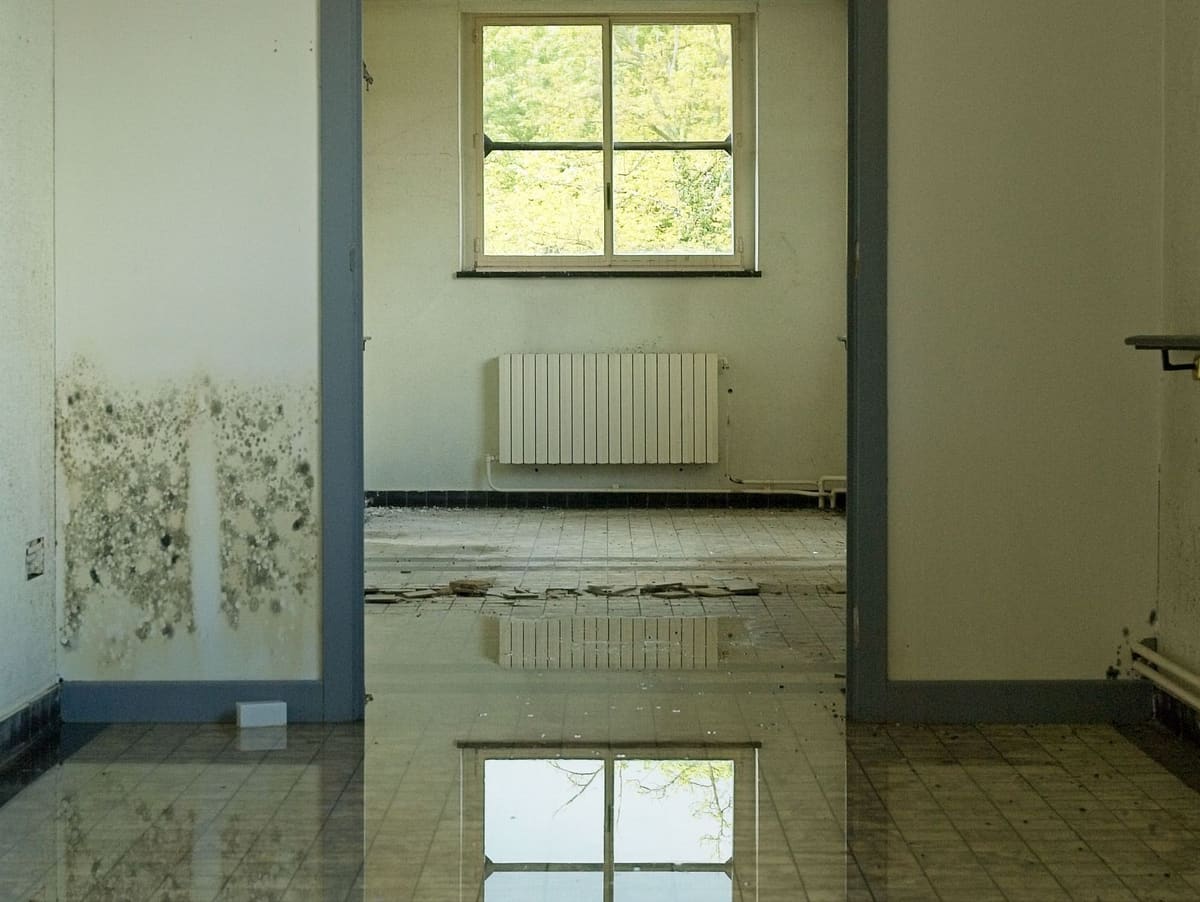
Stock photo: Emmanuel Codden / Pexels.
Cupping, crowning and buckling: what each shape means
Wood swells as it takes on water and shrinks as it dries. Each kind of damage is a different version of that movement, and each one points to where the water is.
- Cupping. The edges of each board rise above its middle, so the floor looks like a row of shallow troughs. Charles Peterson, a consultant for the National Wood Flooring Association, explains in Fine Homebuilding that boards cup when their bottoms are wetter than their tops. After a leak, that often means water got under the boards and is still sitting there.
- Crowning. The opposite shape: the middle of each board sits higher than its edges. One way to get it is to sand a cupped floor before it has dried. Peterson warns that sanding the raised edges too soon can leave you with crowned boards once the wood is fully dry.
- Buckling. Boards with nowhere left to expand push against each other and lift off the subfloor. Peterson writes that flooring that gets too moist can lift, move door frames and pop trim off the wall, and that the cause of buckling is always moisture.
- Stains. A white or cloudy patch often sits in the finish. Dark gray or black marks usually mean water reached the wood itself, often slowly, around a radiator valve, a plant pot or the edge of a dishwasher.
Why the subfloor decides what can be saved
Hardwood is nailed or glued to a subfloor. In many brownstones and frame houses that is plywood or wood planks over joists, and in many newer apartment buildings it is concrete. Either way, water that runs through the seams between boards spreads across that layer, where the room's air can't reach it. The tops of the boards dry while the bottoms stay damp, and that difference is what holds the cup in place.
That is why drying only what you can see doesn't work. The EPA's water-damage table for schools and commercial buildings says the subfloor under carpet or other flooring also has to be cleaned and dried, and the same logic applies under wood.
In New York City, the water often comes from somewhere out of sight. HPD's heat season starts October 1 and lasts until May 31, so a radiator valve can drip into the boards for weeks before anyone notices the stain. A dishwasher line, a laundry hookup or a leak in the apartment upstairs can run down inside a wall and spread under your floor before it shows. If a washer was the source, our guide to washing machine leak water damage covers the floor below as well.
Dry first, then judge: can water damaged hardwood floors be saved?
Often, if the water was clean and the drying started early. But the honest answer only comes after the wood is dry.
Start with the clock. According to the EPA, mold in most cases won't grow on wet or damp things that are dried within 24 to 48 hours. For wood, it advises removing moisture immediately and drying with dehumidifiers, fans and gentle heat, and to be very careful applying heat to hardwood floors. It also says to keep fans off until you have confirmed the water is clean or sanitary.
Then be patient. Peterson writes that some cupped floors lie flat again once the moisture problem is fixed, while others stay deformed for good. For a floor that doesn't flatten, his rule is to sand only when the moisture content of the tops and bottoms of the boards is within 1% of each other, and he checks the bottoms with a meter from underneath. A floor that looks dry on top can still fail that test.
While you wait:
- Don't sand, refinish or nail down cupped boards that are still wet.
- Don't cover the floor with a rug, a tarp or plastic. Anything that traps moisture slows the drying underneath.
- Don't point a space heater at the boards. Heat can dry the tops faster than the bottoms, which is the problem you are trying to fix.
- Do find the source. A floor will not dry while a radiator valve, a supply line or the unit upstairs is still feeding it.
When hardwood flooring usually has to come up
Not every floor gets a second chance. These are the cases where boards usually come out.
- Contaminated water. Under the IICRC's S500 standard, examples of Category 3, grossly contaminated water can include sewage, waste-line backflow from beyond the trap, seawater and rising water from rivers or streams. With contaminated water, the cleanup comes before any drying. Wood soaks it up, and the EPA's flood cleanup guidance says to throw away materials that soak up a lot of water and can't be cleaned and dried. Flood damaged hardwood floors, and boards that sat in a sewer backup, often fall into that group.
- A long soak. The EPA's table sends anything wet for more than 48 hours to its mold guidelines, while noting that mold won't always grow after 48 hours. The longer the boards stayed wet, the more likely they are to need more than drying.
- Broken boards. Peterson writes that he has been able to refasten some buckled floors, while others had to be removed, and that boards with torn tongues and grooves or cracks get replaced.
- A subfloor that can't dry in place. Sometimes a few rows of boards come up so the layer underneath can dry. That is part of drying the room out, not a renovation.
If the water also wicked into the walls, our guide to whether wet drywall needs to be replaced walks through the same decision for the wall.
What GlobePro Restoration does, and what comes after
On a wet floor, GlobePro Restoration's part is tracking down every place the water got in, under the boards included, and drying all of it out. The repairs start after everything is dry. Sanding, refinishing and replacing boards belong to that later stage, and they go better on a floor that has had time to settle.
If there is water on your floor now, our 24/7 water damage restoration serves New York City from our base in Brooklyn, and we work with your insurance company to keep the process as smooth as possible.
Before anything is pulled up, take pictures. New York's Department of Financial Services advises documenting the damage with photos or video before any cleanup, limiting work to what stops further damage, and leaving permanent repairs until your insurer has inspected. For a floor, that means a wide shot of each room, close-ups of the cupped or lifted boards, and a shot of whatever leaked.
Frequently asked questions
Will cupped hardwood floors go back to normal?
Sometimes. Some cupped floors lie flat again once the moisture problem is fixed, and others stay deformed. You find out after the wood and the subfloor are dry, not before.
How long should I wait before sanding a water damaged floor?
Until the boards are dry all the way through, not only on top. The rule Peterson gives in Fine Homebuilding is to sand only when the tops and bottoms of the boards are within 1% moisture content of each other.
Can I use fans to dry a wet hardwood floor?
Only if the water was clean. The EPA's advice is to hold off on fans until you know the water is clean or sanitary. For clean water, it lists dehumidifiers, fans and gentle heat, with extra care on heat for hardwood.
Is a white water stain on hardwood the same as a black one?
Usually not. A white or cloudy mark tends to sit in the finish, while a dark gray or black stain often means water got into the wood itself.
Will GlobePro Restoration talk to my insurer?
Yes. Working with your insurance company is part of the job, to make the process as smooth as possible. Have your policy details handy when you call.
Water on your hardwood floor right now?
Call (929) 969-2534 at any hour, day or night, or send a request and tell us which rooms got wet. Our other services are listed on the services page.
More from the blog
- Water Damage Restoration in Manhattan: Co-ops, Condos and Prewar Walk-Ups
- Water Leak From the Upstairs Apartment in NYC: First Steps and Who Pays
- Flood Cleanup in Brooklyn's Coastal Neighborhoods, 14 Years After Sandy
- Water Damage Restoration in Queens, NY: Basements, Attached Homes and Flash Floods
- Steam Pipe Burst or Radiator Leak in Your NYC Apartment: What to Do When the Heat Comes On