Toilet Overflow Cleanup: When It's a Mop Job and When It Isn't
Toilet overflow cleanup comes down to two questions: what was in the water, and where did it go. Clean water that stayed on a tiled bathroom floor is usually a job for gloves, a mop and a disinfectant. Water with waste in it, water that came back up from the drain, and water that soaked into a rug, the baseboards, the wall or the ceiling of the apartment below all need more than a mop.
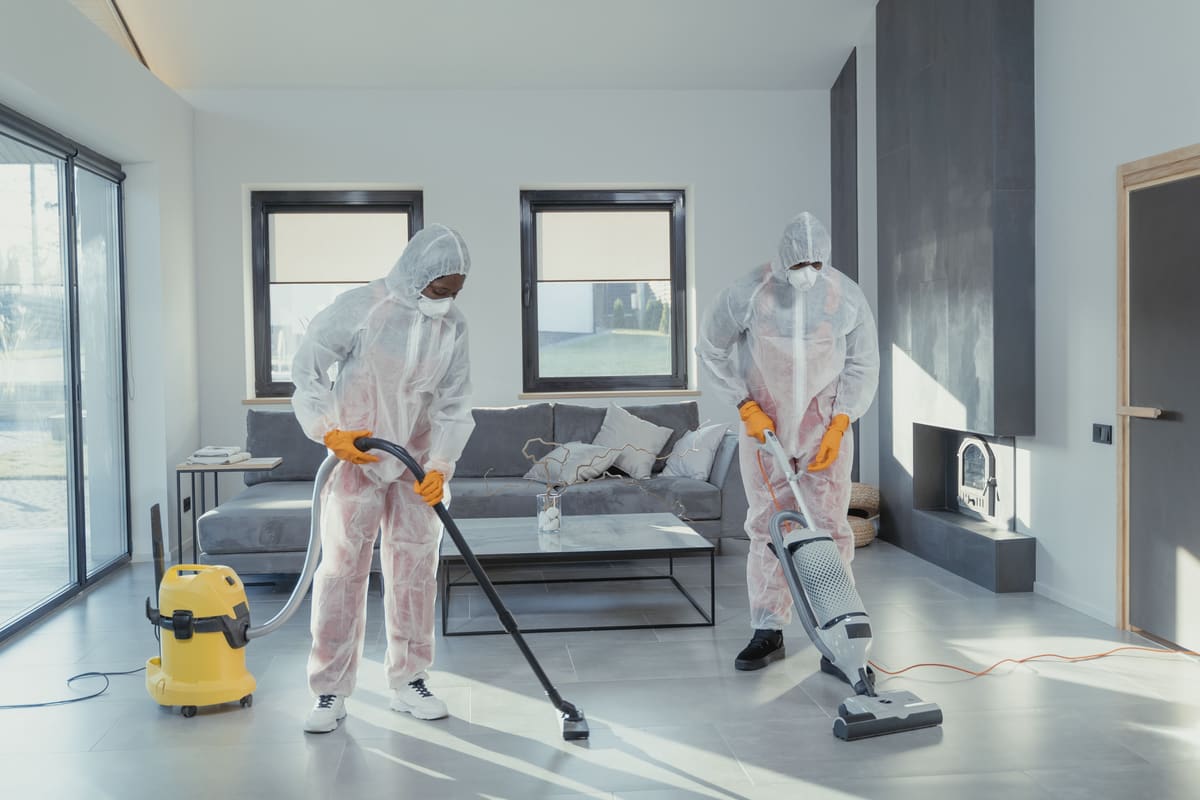
Stock photo: Tima Miroshnichenko / Pexels.
Stop the overflow before you clean anything
- Don't flush again. Each flush sends another tankful into a bowl that can't drain.
- Close the supply valve. It's the small valve on the line running from the wall or floor into the bottom of the tank. Turn it clockwise until it stops.
- If the valve is stuck, lift the tank lid and push the rubber flapper at the bottom of the tank closed, then hold the float up so the tank stops refilling.
- Keep children and pets out of the bathroom and anywhere the water ran until it's cleaned.
- Stay clear of electrical trouble. If water is reaching an outlet, or dripping through a light fixture into the room below, don't touch the fixture. Get the super or building staff.
Clean tank water or contaminated water? How to tell
- From the tank or the supply line. A cracked tank or a leaking supply hose spills water straight from the building's supply, and that water starts out clean.
- From the bowl. Bowl water that had waste in it is contaminated; treat it that way even after the bowl looks clear again. Even bowl water with no waste in it has been sitting in a toilet, so wear gloves.
- Up from the drain. If the water rose in the bowl on its own, or the tub or shower filled when you flushed, the blockage is probably past the toilet, in the drain line. The IICRC's S500 standard says examples of Category 3, grossly contaminated water can include sewage and waste-line backflows that originate from beyond any trap, regardless of visible content or color. Water that backed up from the line can count as Category 3 even when it looks clean.
That matters for your health. New York City's Department of Environmental Protection warns that water containing sewage and germs may infect your eyes, skin, stomach or intestines on direct contact.
Toilet overflow cleanup, step by step
For a clean-water overflow that stayed on a hard floor:
1. Put on rubber gloves, and eye protection if anything might splash. 2. Soak up the water with towels or a mop, or a wet vacuum for more than a little. 3. Clean the floor, the base of the toilet and the lower walls with detergent and water, then use a disinfectant the way its label says. Never mix chlorine bleach with a cleaner that contains ammonia; the EPA warns the combination can produce toxic fumes. 4. Wash the towels and your clothes in hot water, separately from everything else, or throw the towels out. 5. Check the edges: under the vanity, behind the toilet, along the baseboards, and the floor just outside the bathroom door.
If the water had waste in it or came up from the drain, the order changes. Under S500, cleanup of Category 2 or 3 water comes before restorative drying, with contamination controls and worker protection. The EPA says not to use fans until you have determined that the water is clean or sanitary, and its guidance for cleanup crews says OSHA requires protective equipment and containment when water is known or suspected to contain sewage.
What can be saved depends on the material:
- Usually cleanable: tile, porcelain, sealed stone, vinyl and other hard, non-porous surfaces.
- Usually thrown out: bath mats, rugs, carpet and pad, and other porous things that soaked up water with waste in it. They're hard to get truly clean.
- Often cut out: the bottom of a wall or baseboard that wicked up contaminated water. Our guide on whether wet drywall needs to be replaced covers when it has to come out.
A smell that lingers after a clean-looking job often means something under the floor or in a wall is still wet; what causes a water damage smell explains where to look.
When the overflow came through the ceiling below
In an apartment building, an overflow runs into the floor and can come through the ceiling or a light fixture of the unit below. Stay out from under a ceiling that sags.
The 311 guidance on leaks in a building is to go to your landlord, managing agent or super first, or to management or the board in a co-op or condo. If that doesn't get it fixed, a 311 complaint goes to HPD, which contacts the managing agent and can send an inspector. Call 911 if there is immediate danger.
Who pays is a separate question. In a co-op, Habitat magazine reported in 2021 that when a neighbor overflows their toilet, faucet or sink, the damage is generally that neighbor's responsibility, though it depends on the proprietary lease. Ask your insurer before assuming.
If the bowl had waste in it, the ceiling, insulation and anything below that it dripped on got the same contaminated water.
When it's a sewer backup, not a clog
Sometimes the toilet isn't the problem. DEP says the most common cause of sewer backups in New York City is blocked pipes from grease, wipes and other things put down toilets and sinks. It asks New Yorkers to flush only the four P's (poop, pee, puke and toilet paper) and to throw wet wipes in the trash, even ones labeled "flushable."
If raw sewage is backing up into your home, DEP says to report it to 311 right away. DEP says it will inspect within six hours of the complaint, though heavy rain or snowmelt can delay that. If the cause is the private sewer line between the building and the street, the property owner is responsible for it and gets a Notice to Repair.
New York's Department of Financial Services says some insurers offer a water backup endorsement for an additional premium, and that it generally applies to backups from municipal sewer lines, toilets and sump pumps. Check whether your policy has one.
What toilet overflow cleanup costs
There is no flat price. The main factors are whether it was clean or contaminated, how far it spread, how much porous material it soaked, whether it reached the unit below, and whether the work needs containment. GlobePro Restoration quotes every job individually.
Biohazard cleaning is one of the services GlobePro Restoration offers: call or send a request and we will talk through what you need. For the drying, our 24/7 water damage restoration finds every place the water got in and dries out all the affected areas.
Frequently asked questions
Is water from an overflowing toilet dangerous?
It can be. Water straight from the tank starts clean, but bowl water with waste in it, or water that backed up from the drain, should be treated as contaminated. The S500 standard lists sewage among its examples of Category 3 water.
Can I clean up a toilet overflow myself?
Clean water on a tiled floor, usually yes, with gloves and a disinfectant. If the water had waste in it, backed up from the drain, soaked into carpet or walls, or went through the ceiling below, call for help.
Should I run a fan to dry the bathroom?
Only once you know the water was clean. The EPA says not to use fans until you have determined that the water is clean or sanitary.
Does insurance cover a toilet overflow?
It depends on the cause and your policy. DFS describes sewer backup as an exclusion that some insurers let you remove with a water backup endorsement, for an added premium.
My upstairs neighbor's toilet overflowed into my apartment. What do I do?
Tell your super, landlord or building management first, and call 311 if it isn't fixed. Photograph the ceiling and anything damaged, and call your insurer.
More than a mop job?
Call (929) 969-2534, 24 hours a day, or send a request. GlobePro Restoration is a 24/7 restoration company based in Brooklyn, serving New York City.
More from the blog
- Water Damage Restoration in Manhattan: Co-ops, Condos and Prewar Walk-Ups
- Water Leak From the Upstairs Apartment in NYC: First Steps and Who Pays
- Flood Cleanup in Brooklyn's Coastal Neighborhoods, 14 Years After Sandy
- Water Damage Restoration in Queens, NY: Basements, Attached Homes and Flash Floods
- Steam Pipe Burst or Radiator Leak in Your NYC Apartment: What to Do When the Heat Comes On