Oil Burner Puffback Cleanup: Soot After the Heat Kicks On
Puffback cleanup starts with the burner, not the soot. A puffback is an explosion of unburned oil inside the combustion chamber of an oil-fired boiler, furnace or water heater, and it can blow soot through the whole building. Shut the heating system off, leave the soot alone until it can be cleaned properly, and call your heating service company and your insurer before anyone starts scrubbing.
GlobePro Restoration is a 24/7 restoration company based in Brooklyn. Here is what a puffback is, what to do in the first hours, and what a proper cleanup covers.
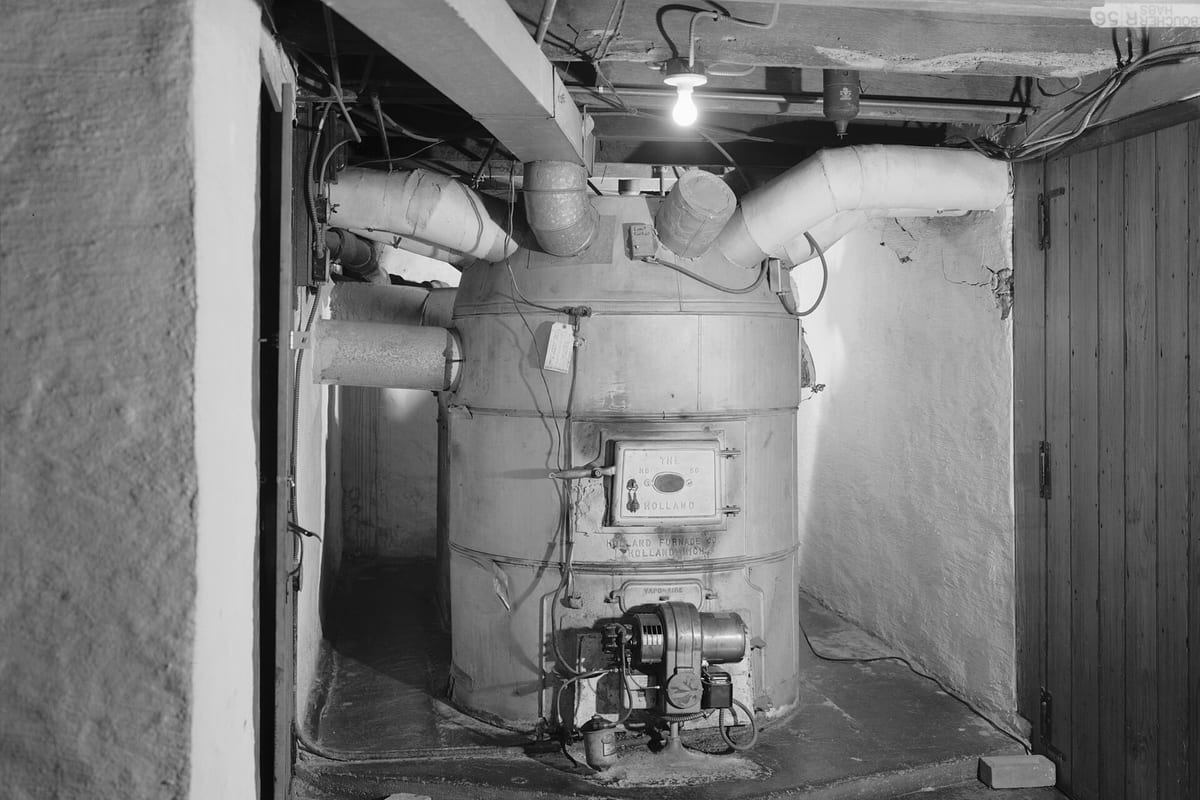
An oil-fired furnace in a basement. Photo: U.S. National Park Service, Public domain, via Wikimedia Commons.

What is an oil burner puffback?
InspectAPedia, a building inspection reference, describes a puffback as an explosion of unburned oil in the combustion chamber, and traces most of them to maintenance or installation problems. Among the causes it lists:
- Air leaking into the oil line, which can push extra unburned fuel out at the end of a burner cycle.
- A dirty or partly blocked nozzle, which makes a poor flame and incomplete burning.
- A fuel valve that doesn't shut off cleanly, letting oil leak into the chamber.
- Too little combustion air, which gives a sooty burn and fouls the igniter.
The same reference says most equipment gives warning first: heating-oil or exhaust smells, soot on top of the boiler or furnace, soot stains on walls or ceilings, or a soft rumble after the burner shuts off. A burner that blows soot into the boiler room is not running normally.
One habit makes things worse. If the burner keeps shutting down, don't keep pressing the reset button. InspectAPedia warns that repeated resets can leave unburned oil in the chamber that then ignites at once.
Puffback cleanup: what to do first
1. Turn the heating system off and leave it off. InspectAPedia's advice is not to run the equipment until it has been evaluated and repaired, and not to fiddle with the boiler controls yourself. 2. Get out and call 911 if a carbon monoxide alarm sounds or the house smells of exhaust. A puffback strong enough to knock loose the flue vent connector risks a building fire or combustion gases in the building's air, according to the same source. 3. Call your heating service company. A technician should examine the combustion chamber and the flue before the burner runs again. 4. Call your insurer promptly. InspectAPedia says to call very soon after a puffback if you may file a claim, and New York's Department of Financial Services says notifying your insurer is the first thing to do after a loss. Photograph every affected room before anything is cleaned. 5. Leave the soot where it is for now, and keep people and pets out of the worst rooms.
Why you shouldn't wipe puffback soot
Puffback soot is oily. It comes from fuel that didn't burn cleanly, so it behaves more like a greasy film than like dust. A damp cloth or an all-purpose spray tends to smear it across the wall and press it into flat paint, and walking through it tracks it into carpet and up the stairs.
It also travels further than it looks. In a house with a warm-air furnace, InspectAPedia names the ductwork as one of the things that spreads soot, so every register and return may need checking. A boiler with radiators has no ducts to carry it, but a puffback can still send soot through the building.
Turning the heat off in winter carries its own risk. DEP says homeowners are responsible for protecting their pipes and water meter from freezing, and warns never to thaw a frozen pipe with an open flame. If you bring in a space heater while the burner is down, the FDNY says to keep it at least 3 feet from anything that can burn, plug it straight into the wall rather than into an extension cord or power strip, and never heat the house with the oven.
What a full puffback cleanup covers
A thorough cleanup reaches more than the walls:
- Ceilings and walls, worked from the top down, in every room the soot reached.
- The boiler or furnace room, where deposits are often heaviest.
- Ductwork, registers and returns in a forced-air house, cleaned before the system runs again.
- Soft things such as curtains, upholstery, rugs, bedding and clothing, some of which clean well and some of which don't.
- Hard contents: furniture, electronics, dishes and anything on open shelves.
- The smell, which stays in fabric and porous surfaces until the residue is out.
For the soot itself, call on our fire and smoke damage restoration. GlobePro Restoration removes the damaged items, clears the area, and gets rid of the soot and the smoke odor, and we can keep in contact with your insurance company along the way. The burner repair itself belongs to your oil heating service company. For the order a bigger job follows, see the fire damage restoration process, step by step.
If you rent: the boiler is the landlord's
In an oil-heated apartment building, the burner is building equipment, and a puffback that knocks out the heat falls under the city's heat rules. HPD says heat season runs October 1 to May 31. From 6 a.m. to 10 p.m., when it is below 55°F outside, the temperature inside must be at least 68°F, and from 10 p.m. to 6 a.m. it must be at least 62°F whatever the weather. Tell your landlord first, then call 311 if the heat isn't restored.
Your belongings are a separate question. DFS says a landlord's insurance doesn't protect a tenant's personal property, so soot-damaged furniture and clothes would generally go on your own renters claim, if you have one. If the heat coming back on also started a radiator or steam pipe leak, our guide to radiator and steam pipe leaks covers that side.
Oil heat in New York City: the No. 4 deadline
Some city buildings are burning oil on a countdown. Local Law 32 of 2023 bars boilers from burning No. 4 fuel oil on or after July 1, 2027; No. 6, a heavier residual oil, has been banned since 2020. In June 2022 testimony, DEP said about 3,366 buildings burned No. 4 oil, 1,849 of them as their only fuel. For buildings still on it, this winter is the last full heating season before the deadline, although the law allows variances that run no later than January 1, 2030.
The law doesn't cover No. 2 oil, the lighter fuel DEP described buildings converting to. Oil burners will still be running in city buildings this winter, and because most puffbacks trace back to maintenance or installation problems, a burner service before the cold sets in is the simplest way to prevent one.
Frequently asked questions
What does a puffback look like?
Usually black, oily soot on and around the boiler or furnace, stains on walls and ceilings, and in forced-air houses, soot around the registers. The smell is often the first sign.
Is a puffback dangerous?
It can be. InspectAPedia says a puffback that blows apart the flue vent connector risks a building fire or the release of combustion gases indoors, so shut the system down, get it inspected, and call 911 if a carbon monoxide alarm sounds.
Does homeowners insurance cover puffback damage?
The DFS guide lists smoke damage among the perils in even a basic homeowners policy, but whether yours pays for a puffback depends on its wording and exclusions. Call your insurer promptly and ask before the cleanup starts.
Can I clean up puffback soot myself?
A light film on a small hard surface may come off with the right cleaner, but oily soot smears easily and spreads into paint and fabric. Whole rooms, soft furnishings and ductwork are better left for a full cleaning.
Does GlobePro Restoration work with my insurance company?
Yes. GlobePro Restoration works with your insurance company to make the process as smooth as possible, and as part of fire and smoke damage restoration we can keep in contact with your insurer to ease the burden.
Soot all over the house?
GlobePro Restoration answers 24 hours a day, 7 days a week. Call (929) 969-2534 or send a request.
More from the blog
- Basement Flooding Cleanup in Queens: What Ida Taught Woodside, Flushing and Hollis
- Sewer Backup in NYC: Sewage Cleanup, Who to Call and How to File a Claim
- Water Damage Restoration on Staten Island: Detached Homes, Basements and the South Shore
- The Fire Damage Restoration Process, Step by Step: From Board-Up to Smoke Odor
- Water Damage Restoration in Manhattan: Co-ops, Condos and Prewar Walk-Ups