Fire Extinguisher Residue Cleanup: Is the Powder Safe, and How to Remove It
Fire extinguisher residue cleanup is usually a job you can do yourself after a small, contained fire, as long as you do it soon and in the right order. The powder from a home ABC extinguisher mostly irritates eyes, skin and lungs, so wear gloves, safety glasses and a dust mask. Pick up the dry powder first, then wipe, neutralize and dry the surfaces, because damp residue turns mildly acidic and can corrode metal and damage electronics.
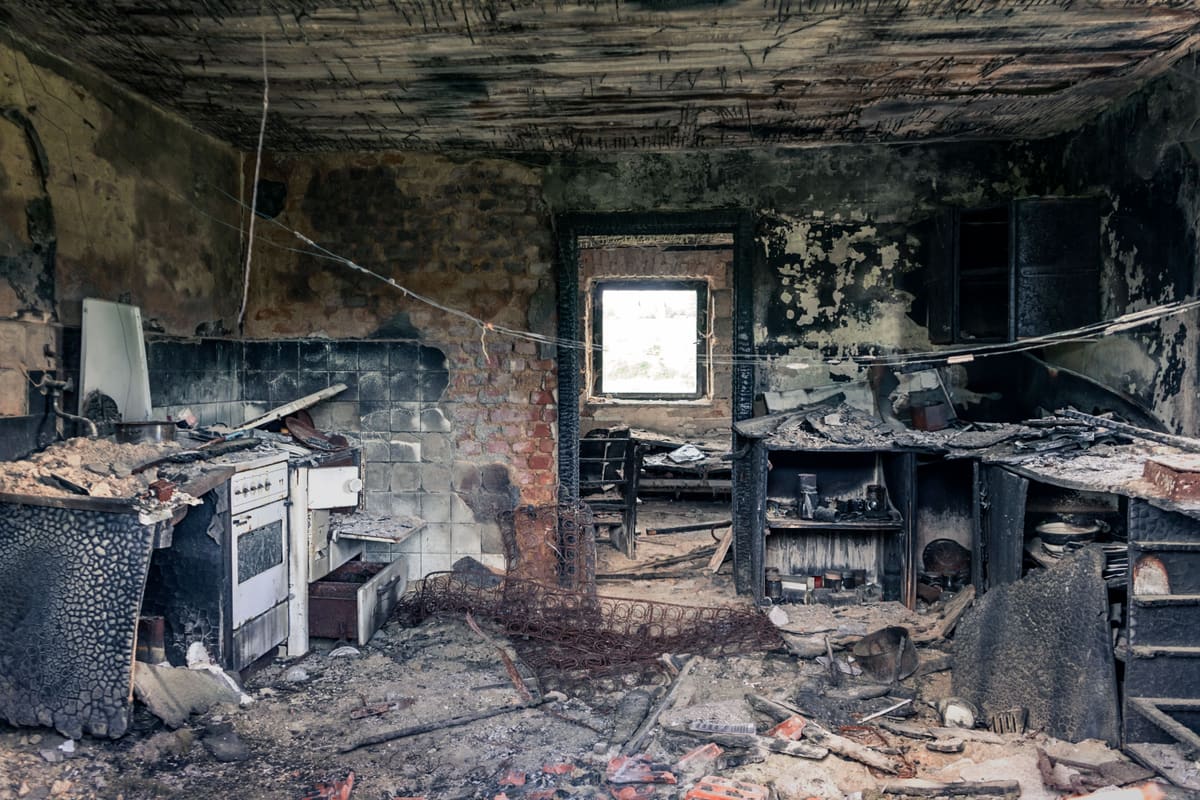
Stock photo: F. Hektor / Pexels.
What is the powder in a home fire extinguisher?
Start with the label. The U.S. Fire Administration says extinguishers can hold water, carbon dioxide, dry chemical or wet chemical, and that multipurpose units labeled "B-C" or "A-B-C" work on most types of home fires. It adds that most home improvement stores carry multipurpose extinguishers rated for Class A through C.
An A-B-C extinguisher is a dry chemical extinguisher. Amerex's safety data sheet for its ABC powder lists mono-ammonium phosphate at 55 to 77% and ammonium sulfate at 15 to 45%, as a light yellow, odorless powder with a pH of about 4 to 5 when mixed with water. That mild acidity is why the cleanup has a neutralizing step.
Some powders rated only for B and C fires are bicarbonates instead. Pyro-Chem, a dry chemical manufacturer, makes its BC-rated powders from sodium or potassium bicarbonate and describes them as mildly alkaline, so they get a different rinse. A Kidde owner's manual recommends BC units for cooking areas.
Is it safe to clean up fire extinguisher powder?
For a small discharge at home, generally yes, with basic protection.
The Amerex sheet says the ABC powder causes skin irritation and serious eye irritation, may cause respiratory irritation, and that breathing it may aggravate existing conditions such as asthma, emphysema or bronchitis. For cleanup it lists safety glasses, gloves and a dust respirator as the minimum. Kidde's manual says the agent is not toxic but may irritate skin, and to flush any contact with clean, cool water.
The University of Washington's safety office says scratchy eyes, nose and throat and a cough should clear within a day or two, and to see a doctor if the irritation persists. Keep anyone with asthma, children and pets out of the room until the job is done.
Leave the cleanup to trained people when the fire involved:
- A lithium-ion battery, such as an e-bike or scooter battery.
- A built-in kitchen suppression system or a Class K extinguisher, the kind for cooking oils and fats that the USFA says is often found in commercial kitchens.
- Toxic or hazardous substances, or burning metal.
That list comes from the University of Washington's discharge guidance. FDNY Smart, the FDNY Foundation's safety site, says to call 911 and get everyone out of the house before you try to fight even a small fire.
Why the residue shouldn't sit
Dry powder is mostly a mess. Moisture is what turns it into a problem. In Pyro-Chem's cleanup bulletin, the manufacturer says its tests found no corrosion on steel or aluminum while the powder stayed dry. Left on surfaces that are exposed to moisture, it says, the residue can be expected to dull and discolor aluminum parts and paint finishes.
Moisture doesn't have to mean a spill. Pyro-Chem says to clean the powder up promptly so it doesn't pick up moisture, whether from direct contact or from humidity, and that monoammonium phosphate is slightly acidic, and mildly corrosive, when moisture is present. Kidde's manual says the same in plain words: clean up the powder immediately to avoid corrosion.
Heat makes it harder. Pyro-Chem says monoammonium phosphate melts above 300°F into a coating that keeps sticking after the surface cools, and that stays acidic when it gets wet. Kidde warns that ABC powder can damage oven surfaces or be extremely difficult to remove from them, self-cleaning ovens included, and says not to use the self-cleaning cycle to get it off.
Electronics are the other worry. The fine powder, which Pyro-Chem puts at about 20 microns, gets into and around almost everything near the discharge, and the University of Washington notes that the residue can damage sensitive equipment if it isn't cleaned promptly.
How to clean fire extinguisher residue, step by step
Steps 2 to 7 follow the order Pyro-Chem gives for its own powders. If the label on your extinguisher says something different, the label wins.
1. Air the room out and put on protection. Gloves, safety glasses and a dust mask. 2. Turn off power to any appliance or electronics in the area. Pyro-Chem says equipment in the area has to be shut off before cleanup. 3. Pick up the dry powder dry. Scoop or sweep it into a bag before adding any water. Skip the ordinary household vacuum: the University of Washington says this powder shouldn't be vacuumed at all, and Pyro-Chem says to use a filter such as a HEPA filter if you do. 4. Wipe with a damp, soft cloth to lift what is left. 5. Neutralize. For ABC powder, Pyro-Chem's solution is one cup of baking soda in three gallons of hot water. For a bicarbonate (BC) powder, it is one cup of vinegar in three gallons of hot water. Let it stand a few minutes, then rinse with warm water. 6. Wash, rinse and dry. Mild soap and water, a rinse, then dry the surface completely. 7. Treat electronics separately. Pyro-Chem suggests an approved electrical contact cleaner for affected contacts, and asking the equipment's manufacturer how it should be cleaned. 8. Bag the swept-up powder instead of hosing it outside. The Amerex sheet says to keep the material out of waterways. 9. Replace or recharge the extinguisher. Kidde's manual says to do it immediately after use.
Throw out uncovered food the powder settled on, and wash dishes, pots and utensils before you use them again.
Kitchen fires: when powder, grease and soot mix
In a kitchen, the powder rarely lands on clean surfaces. It settles into cooking grease and soot, and the mix can cake onto the stovetop, the range hood and the cabinet doors. The baking-soda wash deals with the extinguisher residue. The soot and the smoke smell are a separate job, and in a small New York City apartment they often don't stay in the kitchen. Smoke odor works into cabinets, curtains, closets and the next room.
That part is what fire and smoke restoration is for. After a fire, GlobePro Restoration removes the damaged items, clears the area, and gets rid of the soot and the smoke odor. If the extinguisher went off on more than a small flare-up, our fire and smoke damage restoration team is a 24/7 call, based in Brooklyn and serving New York City.
Going through a fire is hard enough, so GlobePro Restoration can keep in contact with your insurance company to ease the burden. If firefighters used water to put the fire out, the walls may be wet as well as sooty, and our guide to whether wet drywall needs to be replaced explains what happens next.
Frequently asked questions
Is fire extinguisher powder toxic?
Kidde's manual says the agent isn't toxic but may irritate skin. Amerex's safety data sheet says ABC powder irritates the skin, eyes and lungs, can aggravate asthma and may be harmful if swallowed, so wear gloves, glasses and a dust mask.
Can I vacuum fire extinguisher powder?
Not with an ordinary household vacuum. One university safety office says not to vacuum it at all, and Pyro-Chem says to use a HEPA filter that can trap the fine particles if you do.
Will fire extinguisher residue damage electronics?
It can, if it sits. Pyro-Chem says the residue becomes mildly corrosive when it picks up moisture, so turn the device off, clean it promptly and ask the manufacturer how to clean it.
Does GlobePro Restoration deal with my insurance after a fire?
GlobePro Restoration can keep in contact with your insurance company after a fire to ease the burden.
Soot and smoke after a fire?
Call (929) 969-2534, open 24/7, or send a request and tell us what burned and where. Every service is listed on the services page.
More from the blog
- Water Damage Restoration in Manhattan: Co-ops, Condos and Prewar Walk-Ups
- Water Leak From the Upstairs Apartment in NYC: First Steps and Who Pays
- Flood Cleanup in Brooklyn's Coastal Neighborhoods, 14 Years After Sandy
- Water Damage Restoration in Queens, NY: Basements, Attached Homes and Flash Floods
- Steam Pipe Burst or Radiator Leak in Your NYC Apartment: What to Do When the Heat Comes On